

2026 Marina Insurance Market Research Survey Reveals Steady Premium Increases and Concerns About Coverage Gaps
Published on April 1, 2026


Editor’s Note: The Marina Dock Age 2026 Marina Insurance Market Research Survey was open January through February 2026. Respondents from across the country answered questions about insurance premiums, coverage, claims and more.
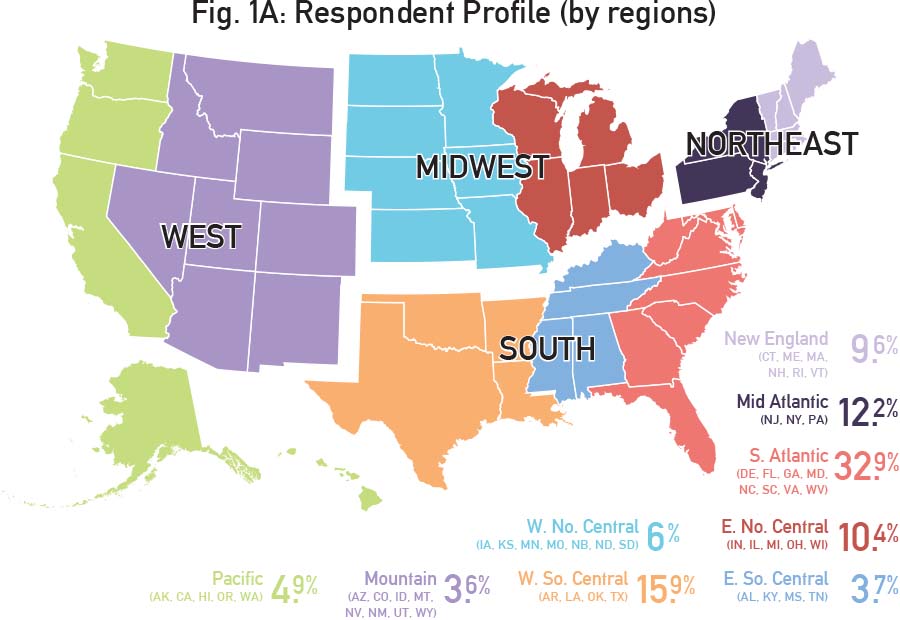
Respondent Profiles
The survey captured responses from marinas of varying sizes and business models. Facilities ranged from small operations with fewer than 50 wet slips to large marinas with more than 500 slips.
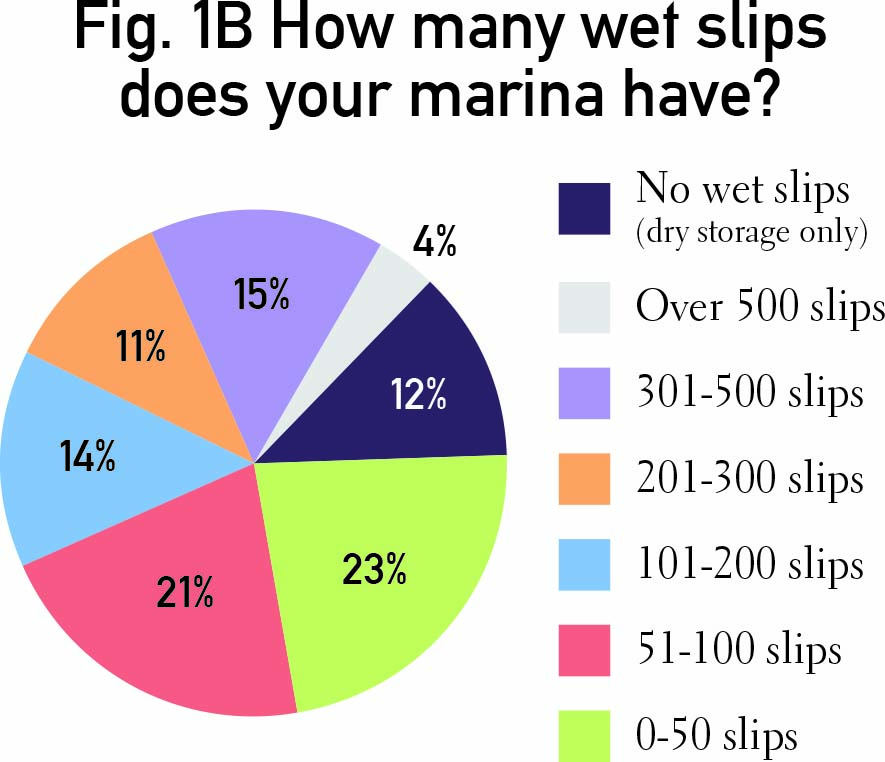
Nearly a quarter of respondents, 23%, reported having 1–50 wet slips, while 21% had 51–100 slips and 14% reported 101–200 slips (Fig. 1B). Another 15% operated facilities with 301–500 slips, and 4% managed marinas with more than 500 slips. About 12% of respondents operated dry storage-only facilities with no wet slips.
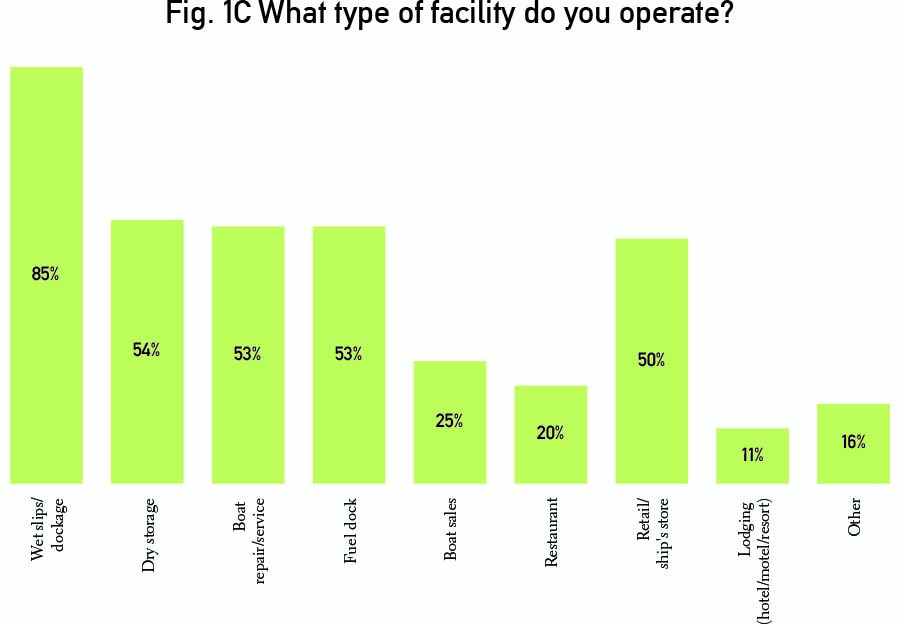
Most respondents operated multifaceted marina businesses rather than single-service facilities (Fig. 1C). The majority, 85%, offer wet slips or dockage, while more than half provide dry storage, boat repair or service and fuel docks. Retail components are also common, with 50% operating ship’s stores, and 25% selling boats.
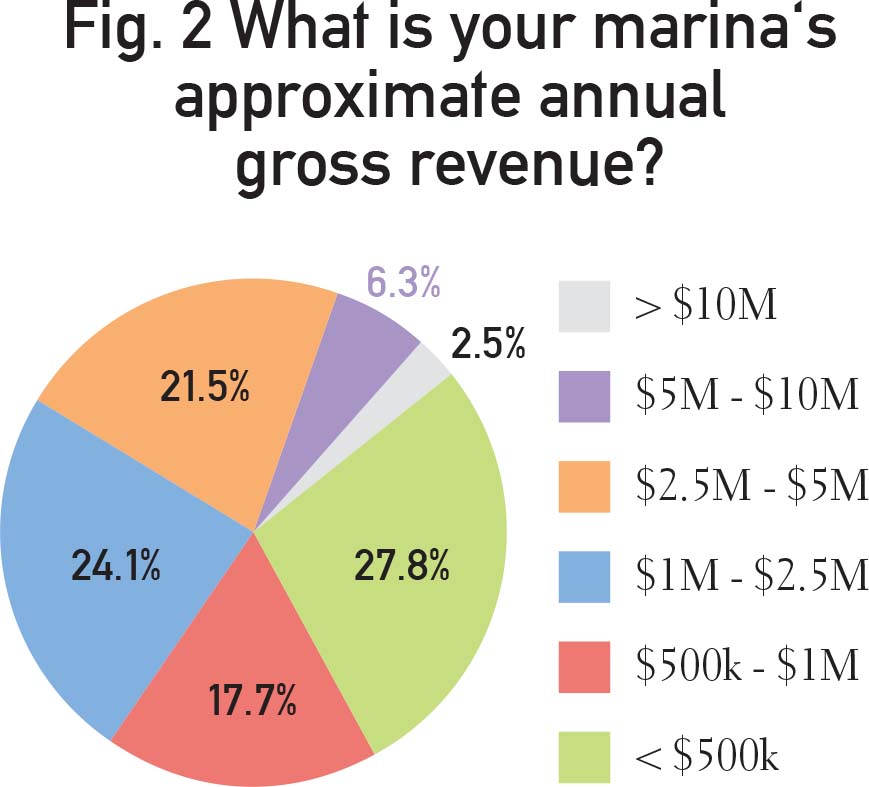
The revenue profiles of respondents varied widely, though smaller operations dominated the survey. About 28% of marinas reported annual gross revenue under $500,000, while 24% generated between $1 million and $2.5 million (Fig. 2). Another 21.5% reported revenue between $2.5 million and $5 million. Only a small portion of respondents, roughly 9%, reported revenue exceeding $5 million annually.
Insurance Premiums and Types of Coverage
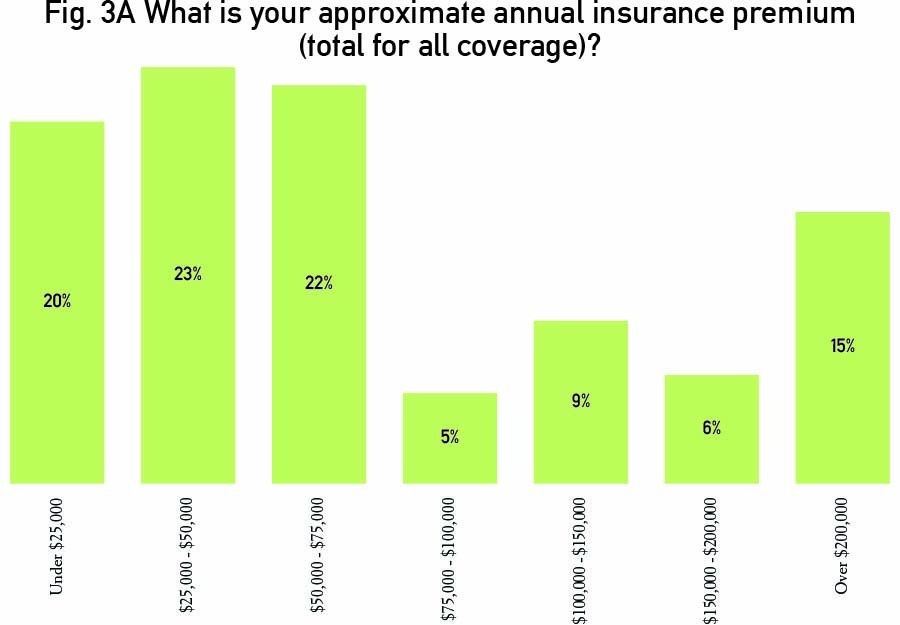
Annual insurance premiums vary considerably depending on marina size, services offered and geographic risk exposure (Fig. 3A). The survey found that the most common premium ranges fall between $25,000 and $75,000 per year.
At the higher end, 15% reported paying more than $200,000 annually for insurance coverage.
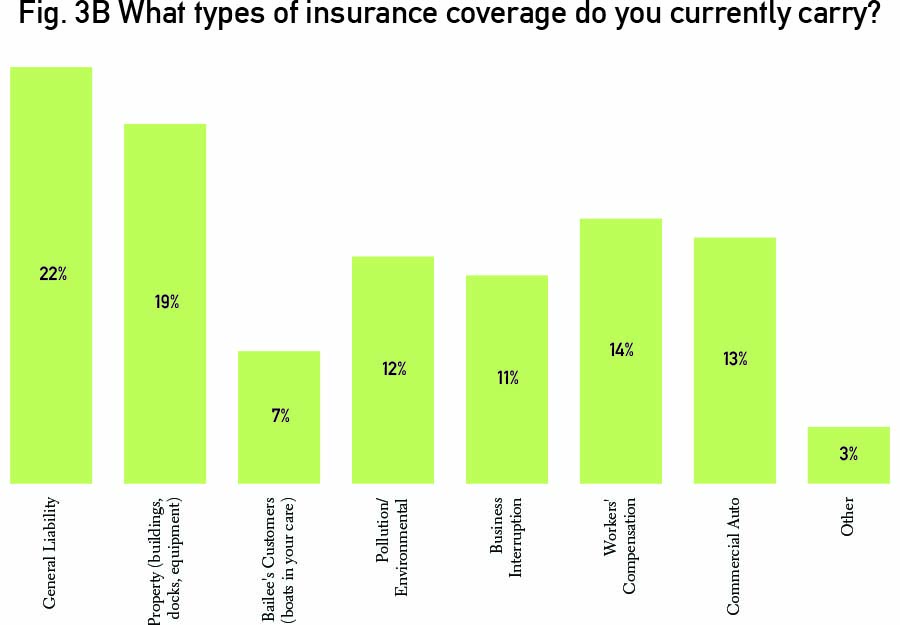
Marinas typically carry a wide range of coverage types. The most common policies include general liability, property coverage for buildings and docks, workers’ compensation, commercial auto, and pollution or environmental coverage (Fig. 3B). Many operators also carry business interruption insurance and bailee’s customers coverage, which protects vessels in the marina’s care.
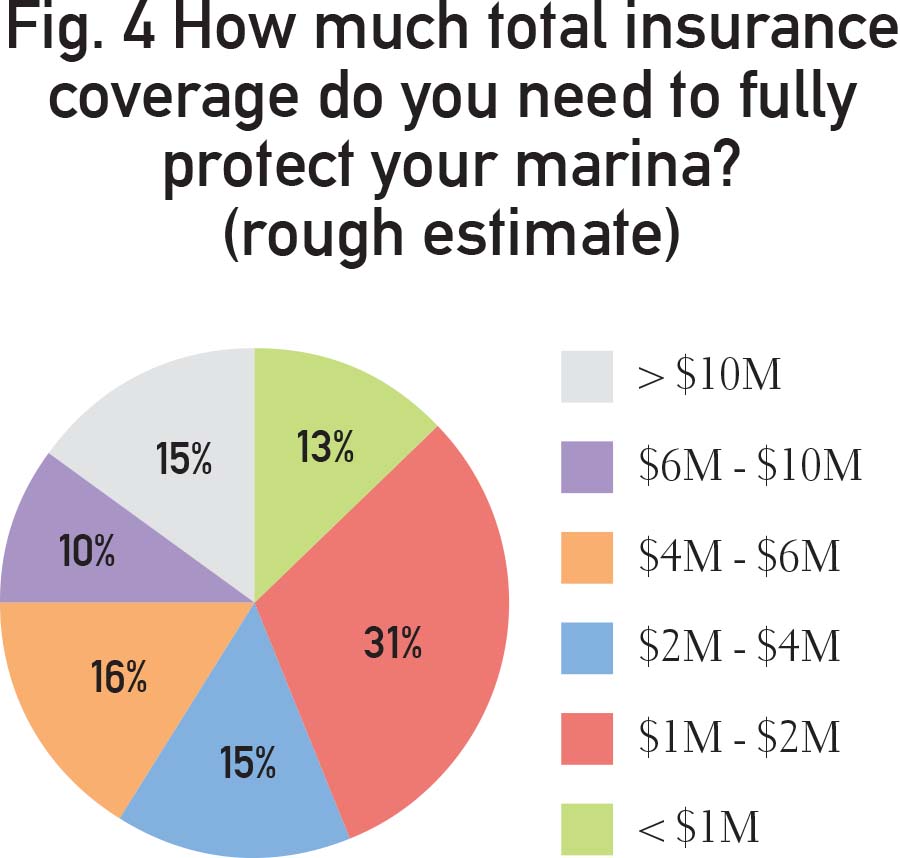
When asked about overall coverage limits, the largest share of respondents (31%) estimated they need between $1 million and $2 million in total coverage to adequately protect their operations (Fig.4). However, a sizable number indicated higher requirements, with 15% needing more than $10 million in coverage and 10% requiring between $6 million and $10 million.
Deductibles for Weather Risks
Weather-related risk continues to shape marina insurance policies, particularly for storm damage and flooding.
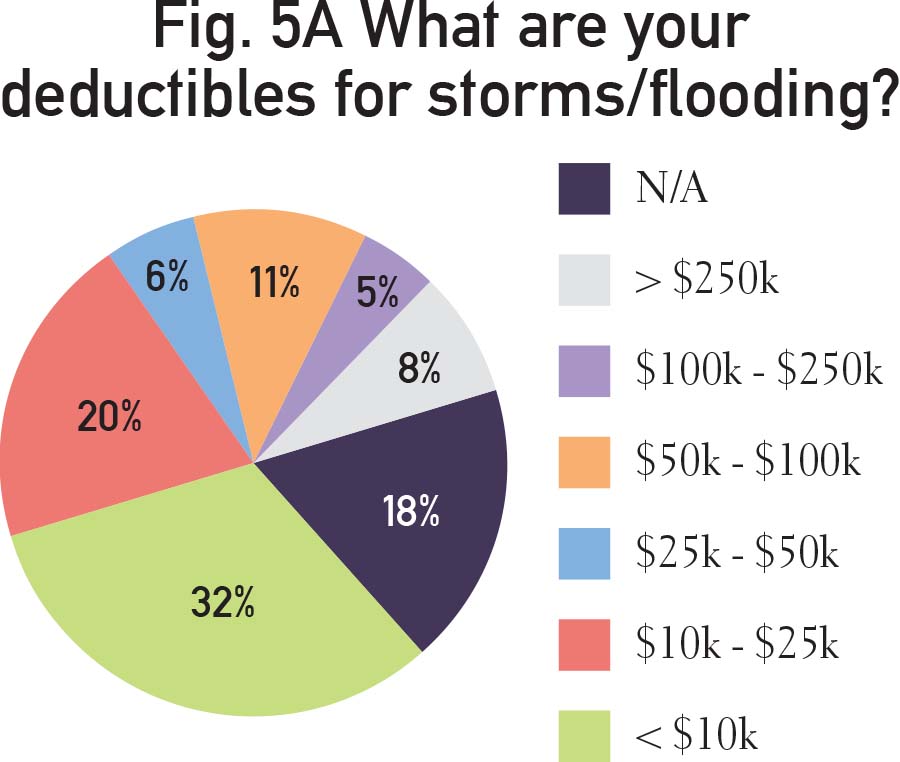
About 32% of respondents reported storm or flood deductibles under $10,000, but many operators face significantly higher out-of-pocket exposure (Fig. 5A). Eleven percent reported deductibles between $50,000 and $100,000, and 8% reported storm deductibles exceeding $250,000.
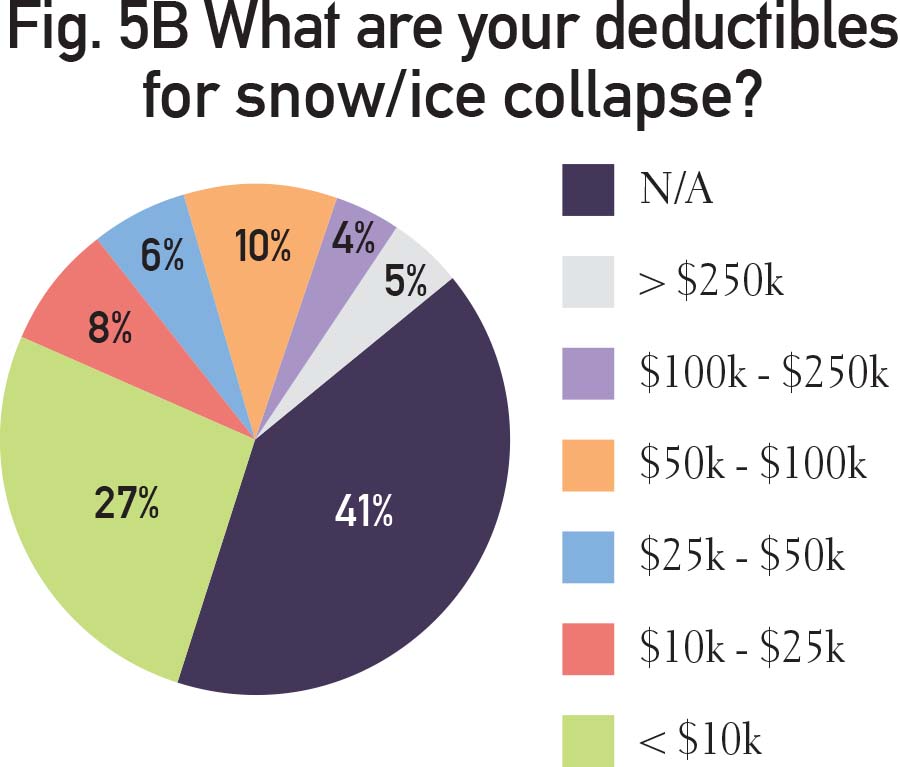
Snow and ice collapse coverage showed a similar pattern, though many facilities reported that the risk does not apply to their operations. Among those with coverage, 27% reported deductibles under $10,000, while some reported deductibles as high as $100,000 or more (Fig. 5B).
Moderate Premium Increases
Despite widespread concerns about rising insurance costs, the survey suggests that most recent premium increases have remained within moderate ranges.
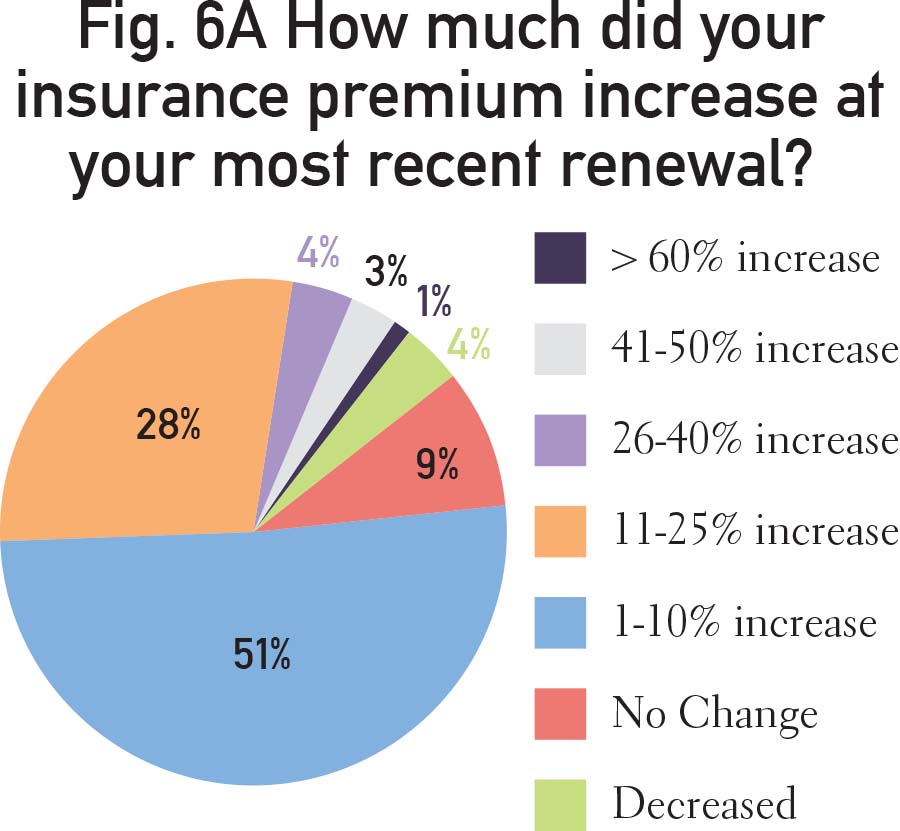
More than half of respondents reported a 1–10% premium increase at their most recent renewal, while 28% experienced increases between 11% and 25% (Fig. 6A).
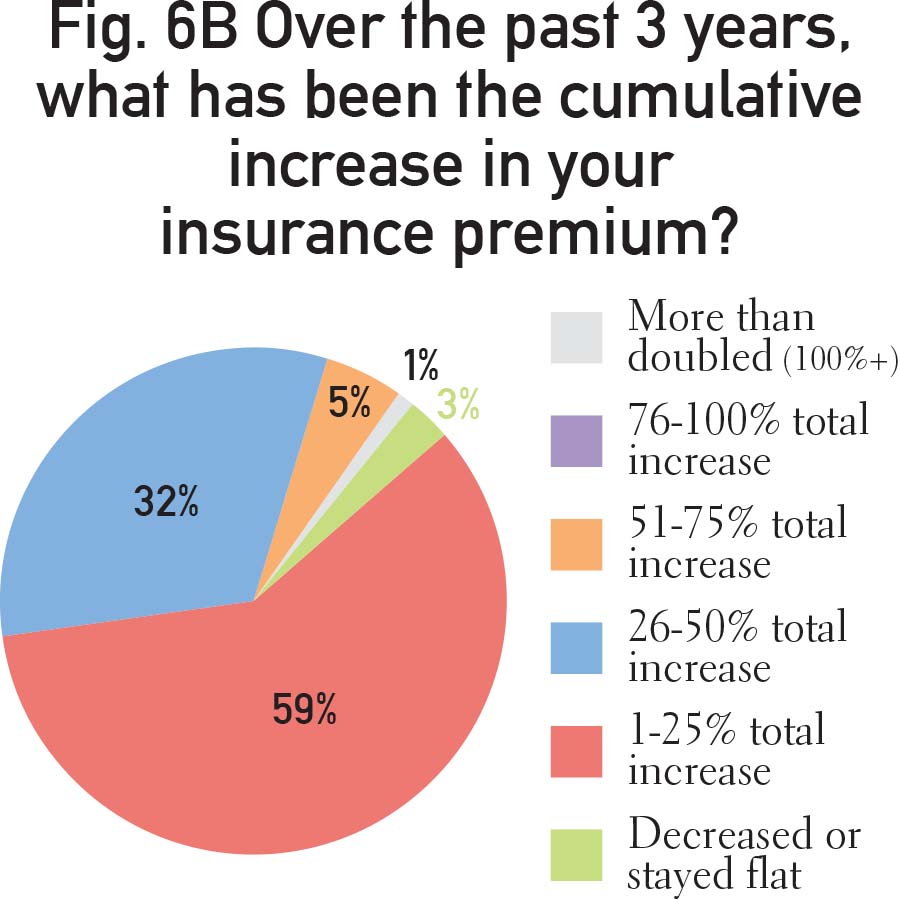
Looking at a longer timeframe, nearly six in 10 respondents , or 59%, reported cumulative premium increases of 1–25% over the past three years, while 32% experienced increases between 26% and 50% (Fig. 6B).
Insurance Renewal Changes
In addition to rising premiums, many marina operators reported other changes during recent insurance renewals.
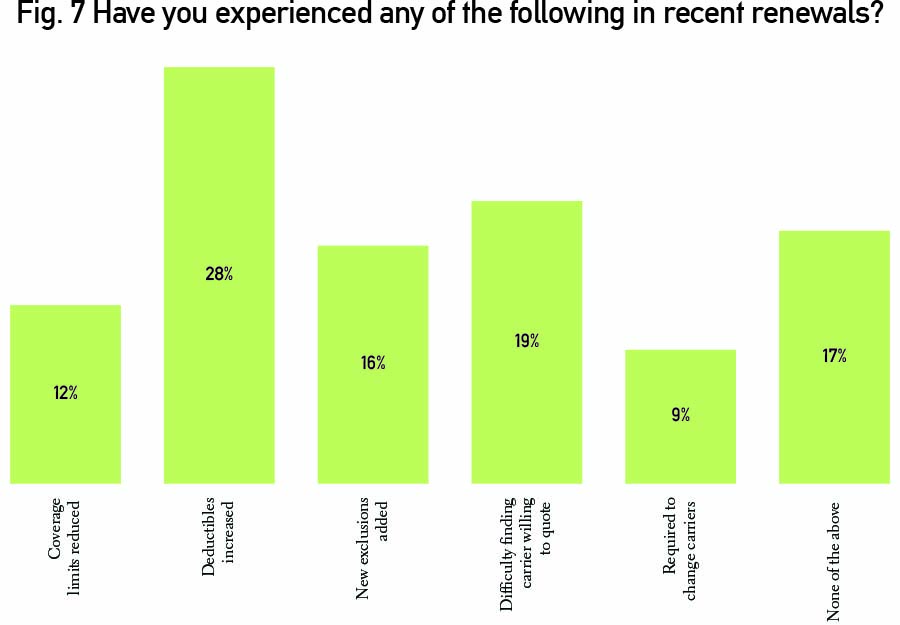
The most common issue was increased deductibles, reported by 28% of respondents (Fig. 7). Other facilities encountered new exclusions in policies, reduced coverage limits, or difficulty finding an insurer willing to provide a quote.
Some operators also reported being forced to switch carriers during the renewal process. Still, 17% of respondents said they experienced none of these issues, indicating that the insurance market remains stable for some operators.
Claims Activity
Despite the perceived risks of marina operations, the survey found that claims activity has remained relatively limited for many facilities.
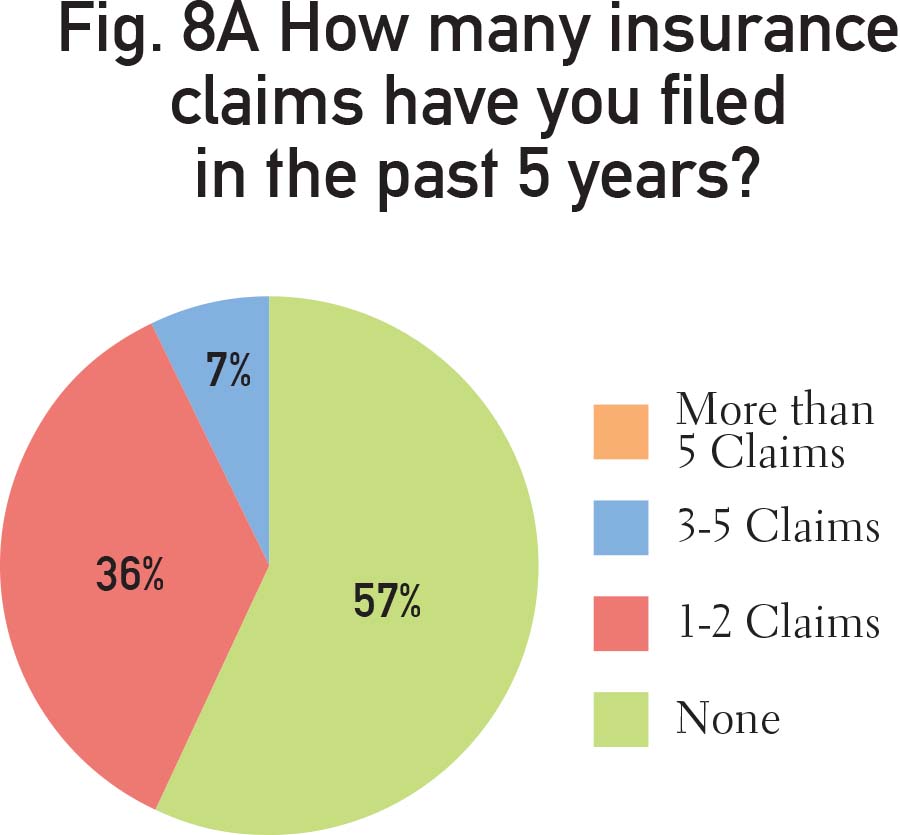
More than half of respondents reported no insurance claims in the past five years, while 36% reported one or two claims (Fig.8A). Only 7% reported filing three to five claims, and none reported more than five claims during that period.
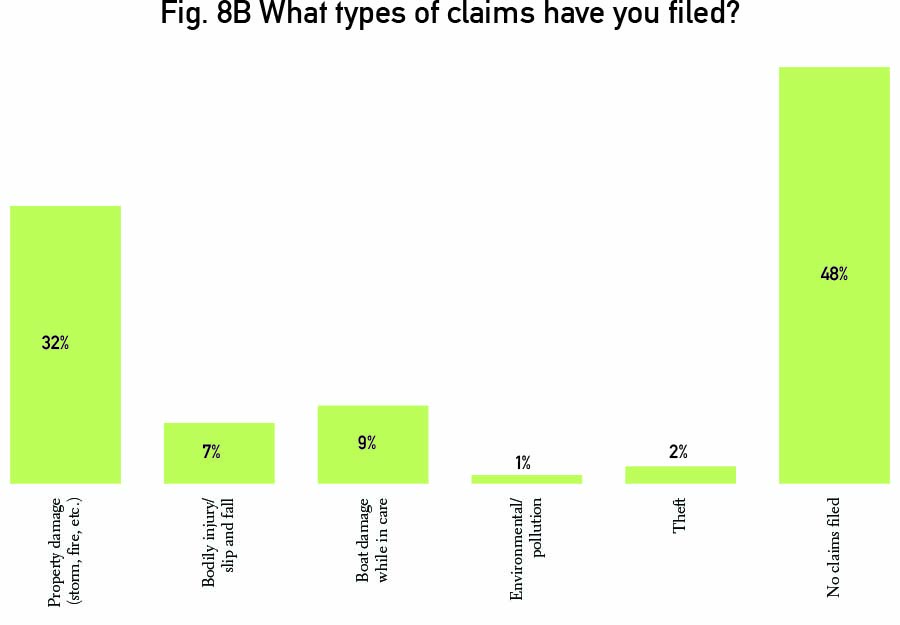
Among the claims that were filed, property damage from storms, fires or other events was the most common category, accounting for 32% of reported claims (Fig., 8B).
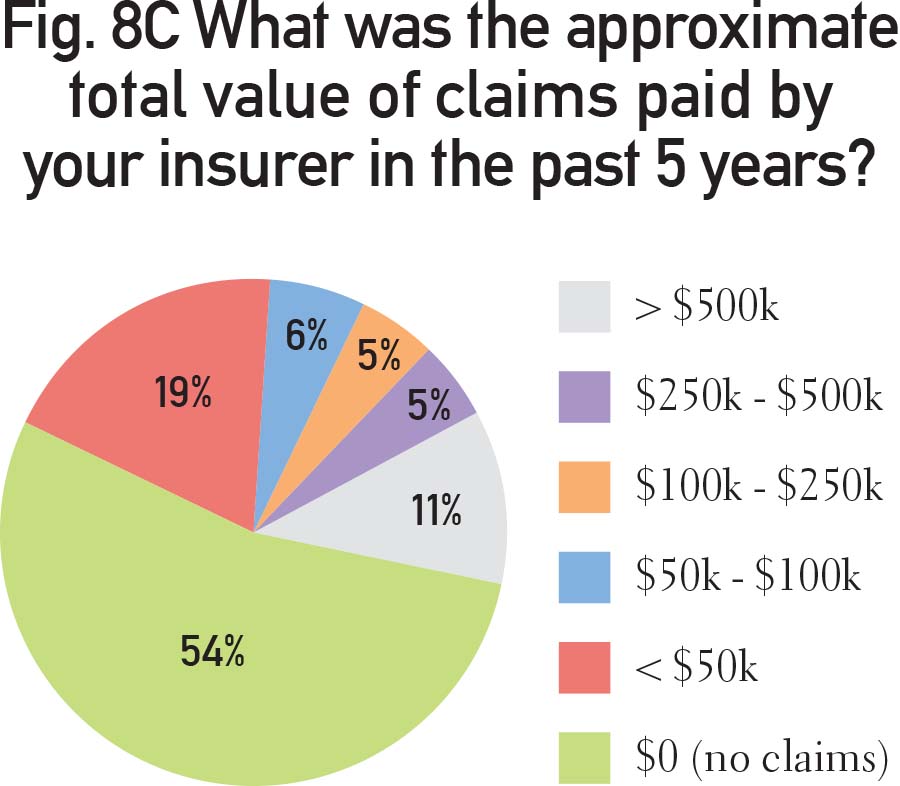
Consistent with the relatively low number of claims, 54% of respondents reported zero claims payouts over the past five years (Fig. 8C). However, 11% reported total claims exceeding $500,000, demonstrating how costly large incidents are for a marina.
Satisfaction Levels Mixed
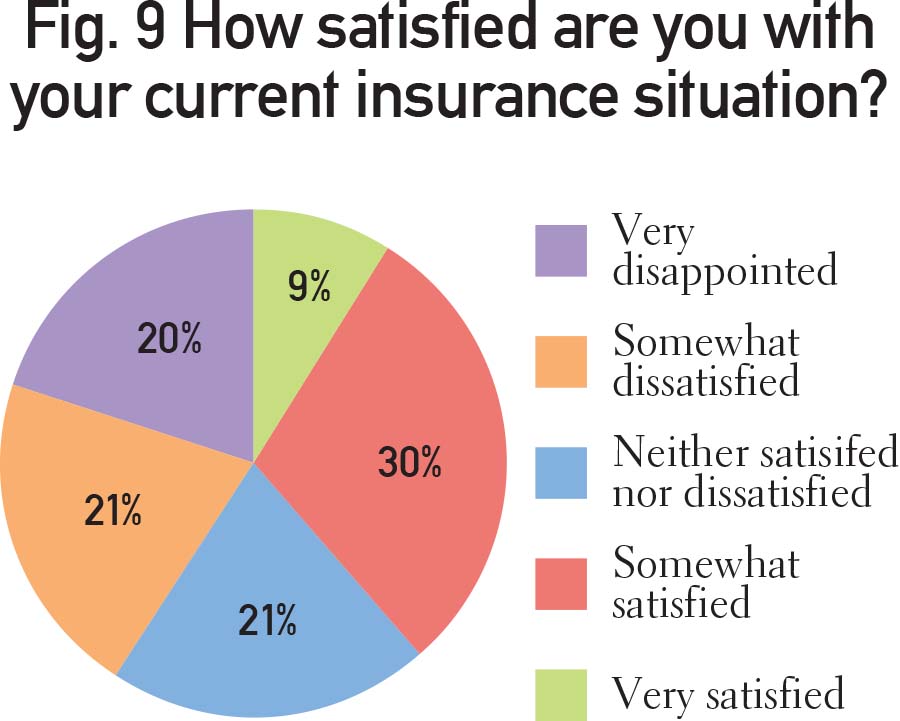
When asked about satisfaction with their insurance situation, marina operators expressed mixed views.
Only 9% said they were very satisfied (Fig.9), while 30% reported being somewhat satisfied. A significant portion of respondents expressed concern, with 21% somewhat dissatisfied and 20% very dissatisfied.
These responses reflect the tension between rising costs and the need for comprehensive protection against weather events, liability risks and property damage.
Coverage Gaps Remain a Concern
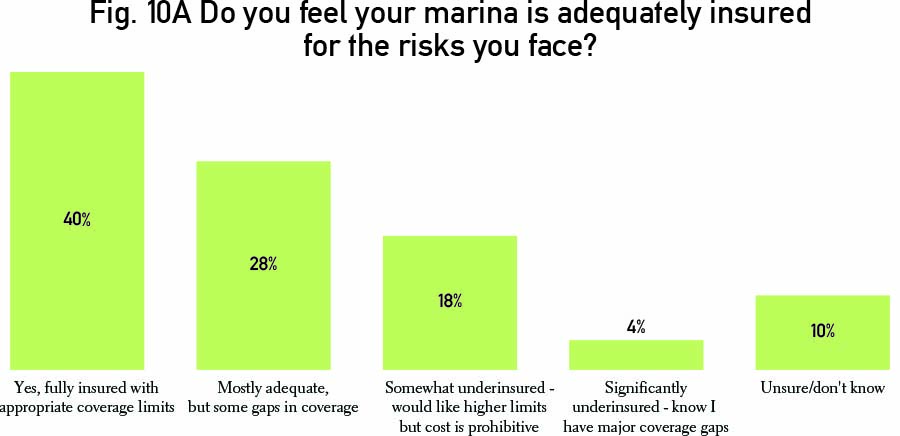
Despite the challenges of rising premiums, many marina operators believe they remain adequately insured. About 40% of respondents said they are fully insured with appropriate coverage limits, while 28% said their coverage is mostly adequate but may contain some gaps (Fig. 10A).
However, a notable share of operators indicated that cost pressures are limiting their coverage. Eighteen percent reported being somewhat underinsured, saying they would prefer higher limits but cannot justify the premium cost. Another 4% said they are significantly underinsured, acknowledging major coverage gaps.
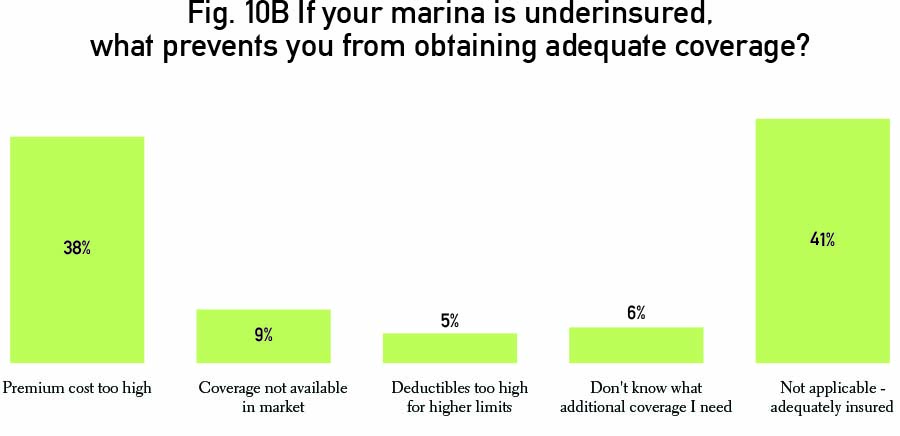
Among operators who said they lacked adequate coverage, the primary barrier was cost (Fig. 10B). Nearly 38% cited premiums that are too high, while others said coverage was unavailable in the market or that deductibles were too high for higher coverage limits.
| Categories | |
| Tags |