

Green Marinas II: Marina Sanitary Sewer Solutions
Published on April 28, 2026


Editor’s Note: This article is the second in a series about environmental initiatives and marina design. The first article, Green Marinas Part 1—Beyond Stormwater BMPs, focuses on stormwater management.
“Waste not, want not.”
This familiar proverb captures the essence of what every marina owner knows well: when we take care of our resources today, they take care of us tomorrow. Nowhere is this more relevant than in sanitary waste management at marinas and waterfront facilities. Clean water and clean operations aren’t just environmental responsibilities. They’re smart business.
If stormwater systems manage what flows across a site, then sanitary systems manage what flows through a site. Reliable, compliant and environmentally sound sanitary systems help marinas enhance guest experiences, protect natural assets and position themselves for sustainable growth.
Good for the Environment and Business
Marinas operate at the intersection of nature and commerce. The cleaner the water, the healthier the ecosystem and the more desirable the marina. Customers want and will gravitate toward facilities that demonstrate care, cleanliness and environmental integrity.
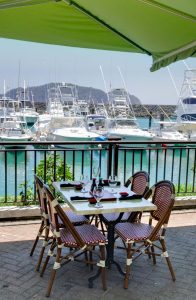
Thoughtful waste management supports far more than compliance. It safeguards water quality, reduces contamination risks, bolsters a marina’s reputation and improves the boater experience. These investments lay the foundation for sustainable, future-ready growth and the infrastructure to support that vision.
From pumpout operations to restrooms, wastewater handling is a vital but often-taken-for-granted part of marina operations. When boaters arrive to find clean restrooms, dependable pumpout facilities and odor-free grounds, they are more likely to treat the property with similar respect. These everyday actions strengthen trust, boost reputation and improve long-term value.
Assessing Waste Outputs
Every marina produces a unique combination of waste streams. Understanding these inputs is the first step toward designing a compliant, right-sized system. Restrooms, showers, laundry facilities, restaurants, bars, fish-cleaning stations and boat pumpouts all contribute to the total wastewater volume.
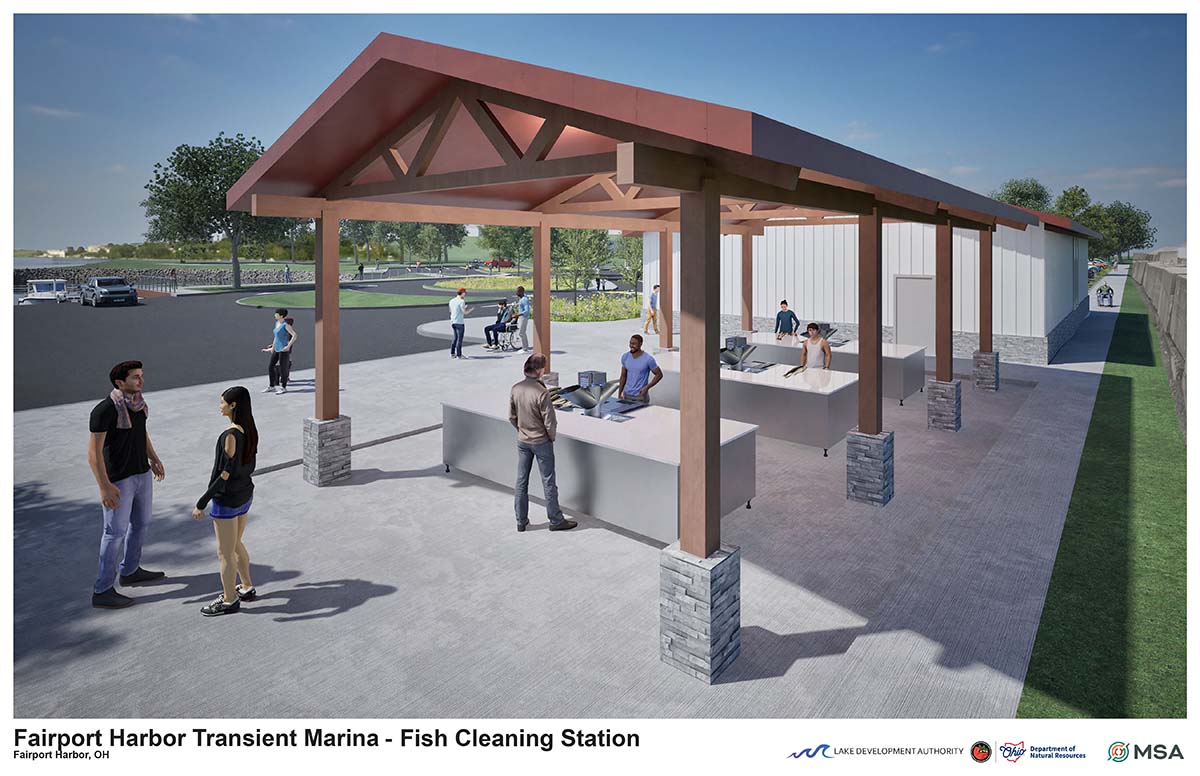
Fish waste is an often-overlooked concern and is treated under many regulations in a manner similar to human waste. While many municipal systems have the ability to accept fish waste, a well-planned private on-site system can manage it as well, provided it accounts for the system’s potential overall capacity. Requirements depend on local regulation, facility layout and proximity to the body of water. Some marinas incorporate grinders at fish-cleaning stations or use dedicated holding tanks that require frequent pump-outs. Others partner with local farmers to repurpose fish waste as a nutrient-rich fertilizer.
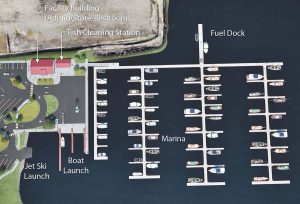
What marinas generally cannot do is dispose of fish waste directly into marina basins or inland waters. While limited offshore disposal may be allowed in certain settings where local ecosystems naturally assimilate organic material, this practice is inappropriate for most marina environments. Particularly in inland and lake settings, this practice can create odor issues, attract pests, spread disease and undermine the guest experience. Proper management of waste can help eliminate these risks and enhance facility cleanliness. Incorporating fish-cleaning station waste into a facility’s sanitary management plan is essential.
Sanitary System Options for Marinas
Marinas generally have two primary sanitary system pathways:
Connection to a municipal sewer system
Installation of a Private Onsite Wastewater Treatment System (POWTS)
The best approach depends on geography, available land, proximity to existing utilities and projected wastewater volume. Urban and suburban marinas can often benefit from connecting directly to local municipal sewer infrastructure. In this scenario, pumpout stations move boat waste from the dock and other site amenities to onshore holding tanks where sewage lift stations transfer it “uphill” toward the municipal line. From there, force mains carry waste to the community’s wastewater treatment plant.
However, the capacity of the pipes and infrastructure can be a limiting factor. Many growing coastal and lakeside cities are already burdened by aging infrastructure and rapid development. Some utilities may be unable or unwilling to accept additional marina loads without significant upgrades. When municipal systems are at capacity, marinas must pursue creative alternatives.
In situations where municipal systems are at capacity, or in more remote or rural locations, POWTS can offer reliable and independent wastewater management opportunities. These systems include holding tanks (either singular or in succession for larger operations) for solid waste collection, primary treatment components and dispersal components, such as a drain field where treated effluent is filtered naturally through soil.
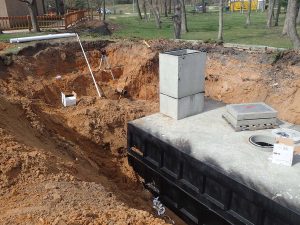
System types vary based on site conditions and may include gravity-fed systems, pressure distribution networks, or mound systems. Adequate land is essential. Drain fields must be large enough, and the site must provide sufficient vertical separation from groundwater per applicable state and local codes. Bedrock, high water tables, or limited land can restrict design options, but with proper engineering, drain fields can often be placed unobtrusively under parking lots, green spaces or landscaped common areas.
Regulations, Permitting and Inspection
Regulatory frameworks vary widely depending on the state, municipality, type of system and discharge method. Marinas connected to municipal systems must secure a connection permit, meet plumbing codes, incorporate grinders or lift stations where necessary and undergo mandatory inspections before receiving a certificate of compliance. Utilities often require ongoing monitoring and documentation, including periodic pumpouts and adherence to daily or monthly flow limits.
POWTS installations face equally rigorous oversight, with state and local authorities dictating the design, siting and maintenance requirements. Most states require re-inspection every three years and mandate that a licensed professional oversee installation, replacement, repair or reconnection.
Systems that discharge to surface waters may fall under federal permits such as NPDES, often renewed every five to10 years. Failure to maintain these systems can result in notices of noncompliance, fines or mandated upgrades.
Understanding these requirements and staying ahead of them ensures continuity of operations during busy seasons and protects the long-term investment of such a system.
Right-Sizing the Sanitary System
A system that works today may not be adequate tomorrow. Marina owners need to think about current needs. Does the system adequately hold, process and convey waste in all seasons, in all volumes of use? What about during surprisingly busy holiday weekends, peak summer boating season or when hosting major events on the property? Similar to how residential homes with private septic tanks must match household size with tank size, marinas must also consider current average visitor rates, sanitary system capacity, peak usage and the rate (or anticipated rate) of marina growth. An undersized system can trigger backups, odors and emergency pumpouts that disrupt the guest experience.
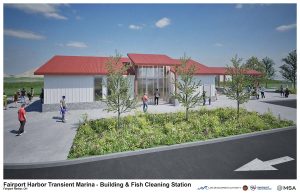
Looking ahead is equally important. If a marina is planning for growth, new docks, the addition of a campground, RV park or more lodging and dining options, the sanitary infrastructure must be designed to match or grow with the facility. Early planning with an engineer ensures future needs are considered and that upgrades can be made proactively and cost-effectively.
The Engineering Perspective
Marinas function as ecosystems, with water-based and land-based entities. It is important to bring these elements together, ensuring docks, pumpout stations, restrooms, restaurants and back-of-house facilities operate as one integrated system.
The key is treating wastewater planning as a foundational piece of the marina rather than an afterthought. When wastewater systems are engineered well, they reduce pollution risks at the sources, support regulatory compliance and protect the natural resources that marinas depend on for successful, sustainable operations. .
Dan Williams, PLA, ASLA, AHLP is principal landscape architect at MSA. He can be reached at dwilliams@msa-ps.com. Marcus Rue, PE is engineering team leader at MSA. He can be reached at mrue@msa-ps.com. Scott Chilson, PE is principal project manager at MSA. He can be reached at schilson@msa-ps.com

| Categories | |
| Tags |