

When Snowstorm Turns to Snow Emergency: Response and Recovery
Published on August 19, 2026


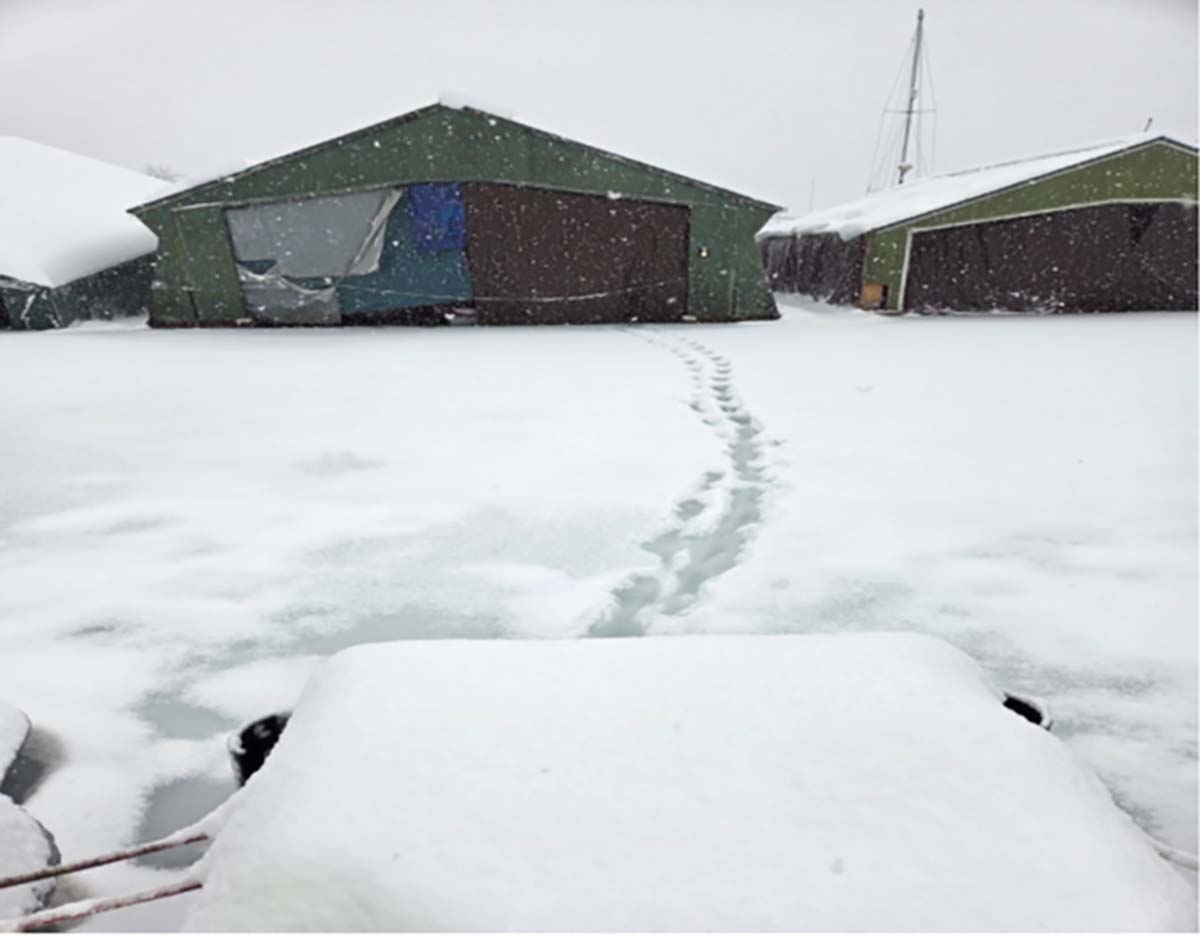
Determining when bad weather turns into a weather emergency is a challenge, and it’s one that the workers at the City and Borough of Juneau Docks & Harbors had to face last December. For four days, the area was hit with sub-zero temperatures, high winds and more than 40 inches of snow. The snowstorm was unprecedented, leaving the crew of eight harbor officers and supervisors to face conditions and challenges they’d never imagined.
Juneau sits on the southeast panhandle of Alaska at the end of the Tongass wilderness and in a fjord system. It’s geographically isolated with just 43 miles of roads and no way to drive out of the area. Everything arrives by plane, ferry or boat. In a typical year, it receives 100 to 150 inches of snow in a season that lasts from October to April. The proximity to the Pacific Ocean generally keeps extreme cold at bay and allows for periods of melting. This geography and climate proved to work against Juneau during what came to be called Snowmageddon.
Angela Thrower, harbor operations supervisor, was in the thick of the storm response and recovery and shared her experience during the spring conference for the Pacific Coast Congress of Harbormasters and Port Managers.
The weather in December was mild. No snow had fallen before December 15, and temperatures were normal. A cold front hit suddenly; temperatures dropped well below freezing, and high winds kicked in. Snow was falling at more than an inch an hour, and there was zero visibility. None of this had really been predicted, and it didn’t stop for four straight days.
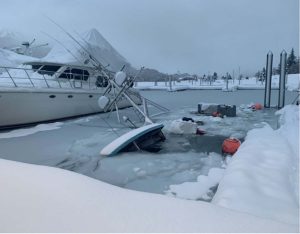
The calls began with reports about boats breaking lines and breaking loose, boats sinking, and boat shelters sinking under the weight of the snow on the roofs. Thrower explained that contractors used a skiff to slide along the slush surface of the harbor to clear off boat shelters. Meanwhile, her staff addressed sinking boats. They got inside a sinking boat and saw that water was coming in, but it was coming in under a layer of ice. “I had one of my newer team members ask if he needed to get into the hold and break up the ice. He got a big NO,” Thrower commented, explaining that if anyone fell in and ended up under the ice, there was no way to get them back out. That was true in boat holds, but also true of customers who wanted to walk across the frozen water to access their boats. The harbor was not completely frozen, leaving an extremely dangerous crossing.
The frozen harbor wasn’t the only obstacle. Because the snow was preceded by extreme cold, it didn’t melt in the harbor. It stacked up on the ocean’s frozen surface. “Distinguishing between boat and dock was impossible. We’d get to one end of the dock we were clearing, turn around, and it looked like you’d done nothing,” Thrower said.
Because it was impossible for ferries, planes or barges to operate, supply shortages began to set in, not only in terms of snow removal equipment, but also manpower. Where hurricanes draw in tree removal and electricians from all over to help, there was no extra help arriving during Snowmageddon.
“Fatigue management was critical. We can’t run for 24 hours a day,” Thrower said. She had planned ahead to leave her home and stay closer to the harbor, which proved a critical choice. “There was waist deep snow at my house for five days. People were getting into accidents and getting stuck on the way to their vessels,” she said.
She set a staggered schedule for her team of eight to work 14-hour shifts. “They were going home to protect their own assets, not to sleep, so they were exhausted beyond belief. One old-schooler said that in his day they stayed until the work was done. I sent him home, and he came back saying he had no idea how tired he was. It was my responsibility to make sure my team was well rested,” she said.
Emergency Response
Snow removal was a constant, and early on it was complicated by local regulations that prohibit dumping snow into the harbor. The fear is that contaminants like oil and antifreeze, as well as materials, could end up in the water. The harbor worked with its state representative to get that regulation temporarily lifted. “It takes time to remove the snow, so the piles just keep getting bigger and bigger until there’s nowhere else to put it all,” Thrower said.
Usually, the snow starts to melt away, but, in this case, the temperatures swung between freezing and below freezing so much that the constant thaw and refreeze left snow piles more like icebergs.
The tally for snow removal stood at about $285,000. The snow piles were still large enough in March that they hindered access for seasonal businesses to bring in summer stocks.
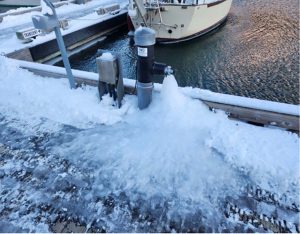
Ten vessels sank, but the crew saved 50 others. By policy, customers must take care of their own boats, but the harbor crew jumps in during emergencies. They made and answered hundreds of calls to customers regarding sinking boats. “The only thing keeping boats from sinking was that they were frozen in place. That would give customers a false sense of security, and they’d postpone taking action,” Thrower said.
When vessels sank, all the snow on the dock would break away, making oil spill reporting impossible. “We would report the sinking, and they’d ask about oil spills. We had no idea how much oil was released because of the snow and ice. The boats were frozen in place. When it started to melt, we had some small slicks, but the snow actually helped keep those slicks confined,” Thrower said.
Dock damage was a constant issue as well. The blizzard coincided with extreme high and low tides. At low tide, boats were sitting on the bottom. The weight of the snow and pull of the boat bowed many of the docks. When the boats sank, they took some of the docks with them.
Communication Was Critical
Communications management was essential. “We started work at 6 a.m. with a quick touchpoint. I kept routine and structure. This is where this person will be at this time. No cell phones, but radios we all monitored,” Thrower said. “At 8 a.m. we met with a pre-brief for safety checks and reminders for the day. Everyone was dispatched to the field, but we all know how long something would take. We set up like a float plan, where if someone doesn’t show up when they are supposed to, we each knew the follow-up and who was responsible. Structure mitigated stress.”
Outward messaging was also prioritized, with Thrower commenting that the emergency texting service proved invaluable. Customers got real-time updates, including photos and acknowledgements of appreciation for their efforts. “We made at least 1,000 phone calls. Administration was swamped,” Thrower said.
Employees posted photos they took to the Harbor’s Facebook page, getting thousands of hits, but more importantly, enticing customers to take care of their boats. Customers came to shovel and help other boaters. Thrower said she personally thanked them for being part of the harbor community, and that sparked many to do even more. “We controlled a positive outcome because of the messaging and relationships we built,” she said.
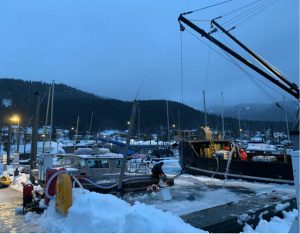
Thrower noticed that there were many young volunteers, so she made it a point to introduce herself to each one and talk up summer employment and internships. Their seasonal recruitment was boosted through that effort. Similarly, the harbor expanded its local vendor network. The storm brought out many entrepreneurs in snow removal and boat care, and many of those small businesses realized there was a need for their services. Thrower listed them in a winter operations brochure that she puts out to customers.
Lessons Learned
Better gear management and a deeper stock of equipment help to ensure that backup is available and that broken items don’t accidentally get put back into operational rotation. For Thrower, that means having a collection of pumps dedicated only for emergencies. They are tested monthly and easily accessible. In addition, equipment operation training is done right after the summer season ends, so the crew is mentally ready to go once the snow starts.
Working collaboratively doesn’t work in an emergency. Thrower likened it to a football team, which won’t function if the whole team tries to carry the ball across the line. Each player has a specific job and sticks to it. “In fatigue mode, routine is critical. There’s less thought on what to do and when because it’s second nature,” she said.
It is important to know essential operations versus service. “We prioritized snow removal on essential operations. We hit the parking lot entrances first so people could get in. Then we addressed the lots and then the docks. We did not prioritize the launch ramps,” Thrower said.
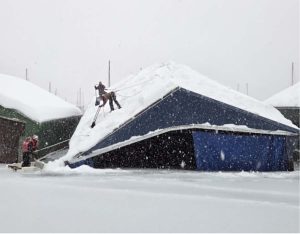
Setting and managing expectations with the team and customers was key. “Your greatest asset is your team,” Thrower said. “My team didn’t stop laughing. We supported each other and realized how absurd it all was.”
Creating an action item matrix with a timeline was also helpful. Thrower said during the storm she got a call that a gangway was close to sinking. It was known to not have enough flotation on a good day, let alone when it was covered in snow. This was also the gangway that held all the electrical conduits for the docks. Staff got lucky and saved it before it sank and shut down all the power to the docks, many of which housed liveaboards. Deferred maintenance items like this will now be addressed as they are noticed. “It’s not what we could do but what we are doing,” Thrower said. “We took discussion into action.”
Her final bit of advice: “Focus on ‘Let’s get through this together. We can do it.’ Keep a positive attitude. The worst thing you can do is stay frustrated. People will follow your lead. Be realistic but forward-focused.”

| Categories | |
| Tags |