

Four Places Marina Owners Lose Time During Permitting and How to Avoid Them
Published on August 19, 2026


Most marina projects don’t lose months to a single disaster. They bleed a week here and three weeks there, then another month when the drawings go back through review. Trace it back, and the delay usually started with a small decision made during preconstruction. By the time anyone notices, the permit set is finished, and the good options are gone.
It is important that marina owners stay on the critical path before construction starts. For marina construction, permitting isn’t a paperwork phase that happens after design. It is design. There are four spots where owners tend to lose time repeatedly.
Mistake #1: Thinking You Can Build Exactly What You Want Just Because You Have the Entitlements
Entitlements matter. They just don’t settle every question. An entitlement might confirm the property is approved for marina use, but it says nothing about whether the site can carry a specific layout or slip count. It doesn’t prove the parking works with the drainage, or that either one works with the building program.
Waterfront constraints shape a project from the first sketch. A setback can dictate where a structure sits. A stormwater rule can shrink usable land before anything has been drawn. A use classification can pull in code requirements the owner never planned for.
This is why due diligence can’t be a checklist that consultants complete in isolation. A civil engineer understands the stormwater limits. An architect knows the building code. A marine engineer knows the dock standards. None of that helps until those answers get tested against each other.
Agency conversations are part of that testing. When the code leaves room for interpretation, one meeting with the authority having jurisdiction won’t cut it. Setbacks might take several conversations, and so might fire access. A marina owner is not fishing for a casual “that should be fine” from a reviewer. An owner is after a clear path the design team can document and follow.
Owners lose time when they design to the entitlement instead of the site. Test the plan early. Find the hard limits. Then, shape the project around what can be approved and built.
Mistake #2: Bringing On Specialists but Not Letting Them Actually Engage with the Agencies
Saltwater projects draw a crowd of reviewers. Fish and Wildlife may weigh in, and so may the U.S. Army Corps of Engineers (Corps). Depending on the site, a water management district or the state environmental agency will have a say, and the Coast Guard or the local building department might, too.
Owners usually hire the right people for this. They bring in a dock engineer, an environmental consultant, and a permitting specialist. Then they route every agency question through one project manager.
That setup looks organized on paper. In practice, it’s a slow game of telephone.
When an agency asks about the dock layout, the dock engineer should be in that conversation. When the Corps raises a concern about impacts below the waterline, the person answering should be the one who did the marine work. A project manager can run the process without translating every technical point between the reviewer and the expert. Every translation costs time. Some of them cost accuracy.
Agency coordination isn’t one submittal followed by silence, either. It starts early and keeps going as the design moves. Reviewers need access to someone who can explain the basis of design and field their follow-up questions. Often that person can adjust a detail before it ever becomes a formal comment.
Specialists earn their fee when their knowledge reaches the agency without distortion or delay. Put them in the room. Let them speak to their own work. Keep the project manager involved, but don’t use that role as a filter.
Mistake #3: Underestimating Overwater Permit Requirements for Marine Construction
Owners with land-development experience get surprised by marine construction all the time. The moment work moves over water, the project picks up regulatory layers that have no equivalent on dry land.
The project may need a submerged land lease. Water-quality review or sediment testing can follow. There may be habitat studies, and a marina owner may have to prove construction will happen inside an approved seasonal window. Even the paperwork has to agree with itself. If the survey and the dock drawings show different limits, that conflict alone can hold up review.
Standards also shift by jurisdiction. A detail that sailed through one county can fail in the next. A requirement that was met five years ago may no longer apply. Local rules stack on top of state and federal requirements rather than replacing them.
Navigational lighting is a good example. A marina may need lighting or marking that satisfies the Coast Guard or a local standard, and that requirement reaches into the electrical design and the dock details. It belongs in the permit drawings. It’s not something to leave for the contractor to solve in the field.
Insurance can turn into a schedule problem, too. Specialty marine coverage and builder’s risk policies can take weeks to place. Underwriters ask about construction methods. They ask about project values and site controls. If the insurance process is started late, the marina owner can end up holding a valid permit on a project that still can’t move.
Most stalls come down to basic documentation: a survey shows one dock limit while the permit drawing shows another; an application lists the wrong construction window; a lease exhibit doesn’t match current design. Each issue looks small. Each one can stop a review cold.
The fix is a permit matrix, built before design gets deep. List every agency and every required approval. Note which studies and leases apply to the site. Assign responsibility for each item. Then, confirm the list with the agencies instead of assuming it’s complete.
Mistake #4: Without Real-Time Constructability and Cost Feedback, Problems Surface After the Permit Is Already In
A marina owner can have a builder on the team and still bring him or her in too late.
It happens when constructability and cost reviews only occur at fixed milestones. The contractor looks at the 60% set, then the 90% set, and everyone assumes preconstruction is covered, but dozens of decisions are made between those reviews. Some of them touch the permit.
Here’s the difference that matters. A problem found during design is considered a design revision. The same problem found after submittal is a permit amendment or a resubmittal. One costs days. The other can cost months.
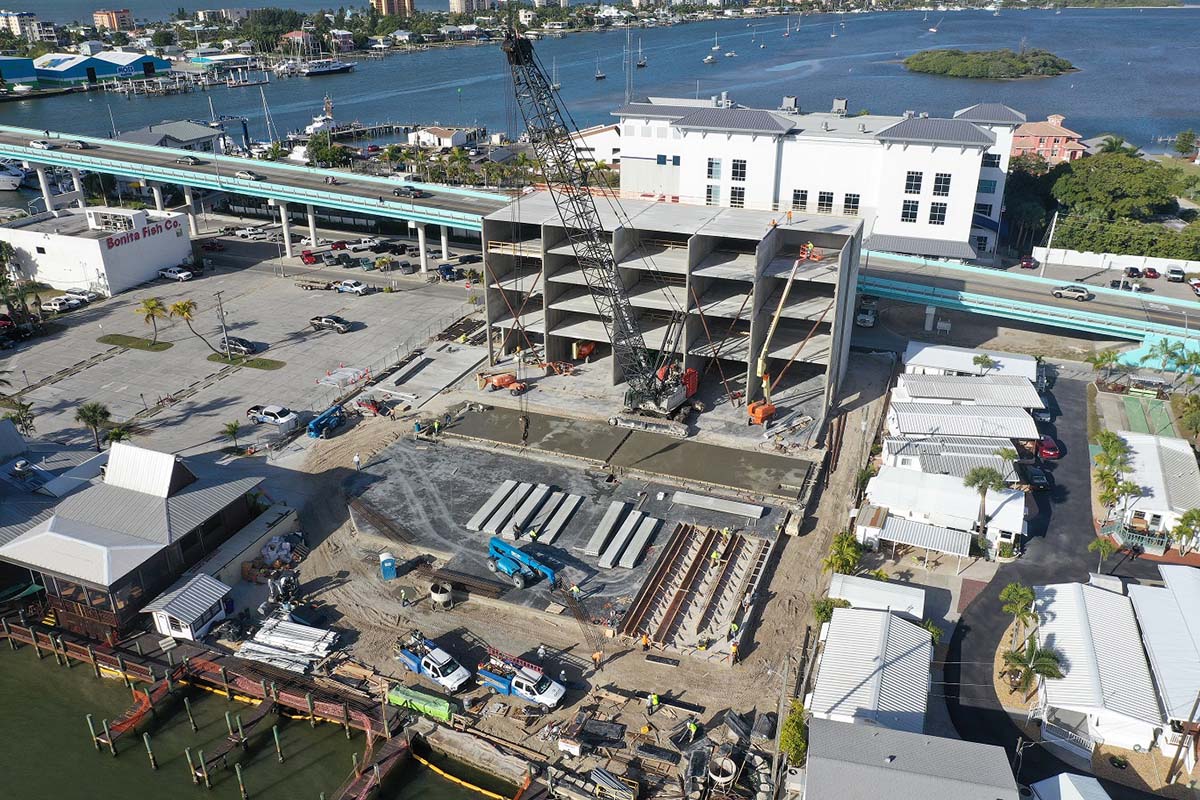
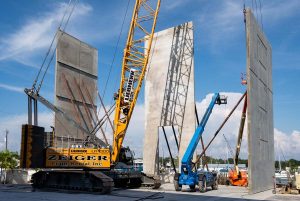
Constructability feedback should track the design as it develops. Check the pile-driving method when it’s selected, not when it shows up in the specs. Review a material substitution before it spreads across the drawings. Consider the foundation and shell construction early: maybe tilt-wall, block, pre-cast, or pre-engineered steel is more conducive to the regional area or the project goal and schedule; maybe a mat slab reduces piling requirements and cost. These are a few critical decisions that can affect a project massively. When they were addressed during design, time and money were impactfully conserved.
None of this means the builder controls the design. It means the design team gets field input while changes are still cheap to make.
Cost and schedule are tied to the same problem. A design choice that pushes the budget out of range or lacks the appropriate detail to be properly constructed will have to change, and if that change comes after permit approval, the owner pays for redesign, plus another review cycle. A permit can be valid and still be unfeasible because the approved project no longer fits the budget or no longer supports efficient, practical constructability.
Do You Want the Best-Prepared Project, or the Fastest?
The best-prepared marina projects aren’t the ones that rush a permit package out the door. They’re the ones that settle the hard questions before submittal.
That takes time up front. What it buys is months the owner won’t spend correcting assumptions after a reviewer, an underwriter, or a study exposes problems. The right time to make those decisions is before approvals, while they’re still affordable and while the schedule can still be protected.
Josh Polhill is director of pre-construction at GCM Contracting™ and Marina Partners™. He can be reached at jpolhill@gcmcontracting.com.

| Categories | |
| Tags |