

Entrepreneurial or Corporate: Is There a Best Way to Run a Marina?
Published on September 30, 2026


The internet offers many definitions of the differences between entrepreneurial and corporate management styles. They generally fall along these lines:
Entrepreneurial leaders act as direct, fast decision-makers who pivot quickly based on immediate market feedback.
Entrepreneurial styles look outward, adapting to shifting market demands and building new ventures.
Corporate managers mitigate risk through deep analysis and structured planning to protect existing assets and achieve steady growth.
Corporate styles focus inward on optimizing existing processes, efficiency and continuous operations.
We all have our own ideas about the differences. The definitions may vary in their specifics, but the underlying themes are generally recognizable.
Companies are much like people in that they come in all different shapes and sizes. They are run by individuals with different values, backgrounds, personalities and approaches. Throughout my career, I have had the privilege of spending time with CEOs of Fortune 500 companies as well as owners of small, family-run businesses. No two management styles were exactly alike, and, according to the owners, each of their approaches worked.
Similar variations on these themes exist throughout the marina industry, from large corporate chains to small, independently owned facilities.
Two Basic Approaches
Management styles seem to fall generally into two groups. The first relies on formal, centralized, top-down decision-making. The second pushes more decision-making and authority down through the organization, allowing managers and employees greater responsibility.
Each approach creates a different working environment. The difference is not limited to the physical facility or the systems used to operate it. It can be felt in the workplace itself.
Today, numerous marinas are changing hands. Some remain independent under new ownership, while others are being acquired by small chains, larger regional operators or global corporations. At the outset of an acquisition, buyers often promise that management style will remain unchanged and that it will be “business as usual,” but a sale inevitably brings changes, some more significant than others.
Independent marinas typically operate with a more family-oriented approach. Owners and managers often know customers by their first names, and there is a strong sense of camaraderie among customers and employees. Most do not make private “financial deals,” but they frequently bend over backwards to anticipate and accommodate customer needs and concerns. Many times they seek input and ideas from both customers and employees and are often able to act on good suggestions quickly.
Employee longevity also tends to be better at many independent facilities than at larger chains. There are undoubtedly several reasons for this, but many employees cite the feeling of being part of a family and taking pride in the operation. Individual contributions are more visible and often more directly valued and rewarded by the owner. There may also be greater flexibility when employees face personal circumstances involving family needs, illness, scheduling or other pressures.
Independent facilities do have disadvantages. Financing major capital improvements can be more difficult, and owners may have less access to capital than larger companies. On the other hand, they are often more receptive to trying something new, adding specialized services or responding quickly to customer and employee concerns and suggestions.
The Corporate Approach
As marina acquisitions accumulate, corporate manuals tend to proliferate.
Almost immediately comes centralized accounting and back-office systems, standardized reporting formats, time sheets, purchasing procedures, operating policies and a host of other requirements. Branding is most always at the front end, creating a common appearance and establishing consistent expectations for customers.
Decision-making authority at the individual marina may gradually be reduced, with more decisions handled by regional managers or corporate headquarters. Budgets and performance goals become formalized and are reviewed monthly, quarterly, semiannually and annually.
There are clear advantages to this approach.
Larger chains generally have greater financial resources and access to capital for major improvements. Given how capital-intensive the marina business is, that can be a significant advantage. Centralized administrative functions also can reduce costs and improve efficiency.
Chains also may have greater purchasing power and the ability to implement pricing strategies across multiple facilities. That can sometimes benefit independent marinas by allowing them to position themselves differently in their local markets.
But greater control can come at a cost. The farther decision-making moves from the individual facility, the more difficult it can become to respond quickly to local customers, employees and market conditions.
Is One Approach Better?
There are advantages and disadvantages to both approaches, as well as to the many combinations between them. There is no single “best” way to operate a marina.
Both independent and corporate facilities can be successful, and both models continue to produce healthy and profitable businesses.
One particularly successful chain, however, demonstrated what can happen when the two approaches are combined.
It was one of the most profitable marina chains globally, yet it also experienced remarkably low employee turnover among both permanent and seasonal employees. What was its secret?
The company combined corporate efficiencies with significant entrepreneurial delegation and incentives.
Back-office accounting, reporting and other administrative functions were centralized, providing consistency, efficiency and lower costs, but individual marina managers had almost complete autonomy over day-to-day operations and decision-making.
Most importantly, they were rewarded based on the financial performance of their own facility, not on the performance of other facilities in their region or on the chain as a whole.
In effect, the CEO made each marina manager the equivalent of an operational part-owner.
Major expansions, significant equipment purchases and potential acquisitions had to be discussed with the CEO, but the CEO generally relied on the manager’s judgment and assisted with implementation rather than dictating the decision.
The manager determined who would be hired and established compensation based on employees’ responsibilities and performance. Each facility was run as if it were the manager’s own company.
That created the same family-like environment found at many successful independent marinas. It also produced employee loyalty and high-quality work.
At the same time, it created friendly competition among the various facility managers. They shared ideas about what worked and what did not, which products were most effective, which suppliers were reliable and how other facilities were addressing common problems.
The chain became a community of individuals rather than simply a collection of facilities.
Managers were expected to spend at least some weekends and holidays at their facilities, interacting with customers and employees and observing what was working as well as what could be improved.
Their compensation was based on a formula established by the CEO that considered financial performance as well as customer acceptance. The better the results, the greater the reward. Managers were encouraged to use the same philosophy with their employees.
It proved to be an incredibly successful strategy.
The Importance of Incentives
As chains grow, however, corporate controls often grow with them.
Unlike the example above, many larger organizations divide their facilities into regions, with management bonuses determined by regional rather than individual-facility performance. This can encourage cooperation among managers within a region, which is certainly valuable.
But there can also be unintended consequences.
Consider a manager whose marina significantly exceeds its financial targets while the rest of the region underperforms. If that manager’s bonus is based primarily on regional results, the incentive to outperform may be weakened.
The consequences may eventually show up in employee turnover.
Finding, hiring and training good employees is time-consuming and expensive. We live in an increasingly mobile society, and employee retention is an ongoing challenge throughout the marina industry.
Many independent facilities provide examples of what long-term employee relationships can look like. We know of numerous marinas where teenagers began working as seasonal employees during high school. After completing their education or other commitments, they returned to the marina and eventually worked their way into meaningful, permanent positions.
Other small facilities have developed unique compensation packages tailored to individual employees’ needs and contributions.
Keeping good employees – particularly skilled mechanics – has become increasingly difficult, especially when the job requires working weekends throughout the busy season. Money is important, but it is not everything.
There are many ways to reward and retain valuable employees. One example that caught my attention was a marina that gave its mechanic a fully paid off-season vacation for him and his family. That proved to be worth more to the employee than a simple increase in salary, and it demonstrated that the company understood and valued the individual.
Creating a Sense of Belonging
Ultimately, how employees perceive the way they are treated is critical.
Employees want to know that their contributions matter. They want to be respected, heard and fairly rewarded. They want some degree of autonomy, and they want to feel that they belong.
That may be the most important lesson for marina operators, whether they are independent owners, regional chains or global corporations.
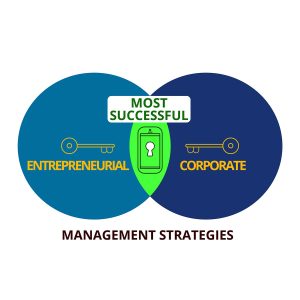
The entrepreneurial and corporate models each have strengths. The entrepreneurial approach can provide flexibility, speed, personal relationships and a strong sense of ownership. The corporate approach can provide capital, systems, consistency, purchasing power and administrative efficiency.
The best operating model may therefore be neither purely entrepreneurial nor purely corporate.
It may be the ability to combine the strengths of both: centralized systems where they make sense, combined with decentralized decision-making where local knowledge matters.
Give managers responsibility. Give them the authority to act. Reward them for results. Listen to employees. Listen to customers. And create an environment in which people feel that the marina is not simply where they work, but somewhere they are proud to be.
That approach may not fit neatly into a corporate manual or an entrepreneurial management textbook, but for long-term viability, profitability, customer satisfaction and employee retention, it may be the best management philosophy of all.
Dan Natchez, CMP, is president of DANIEL S. NATCHEZ and ASSOCIATES Inc. He can be contacted by phone at 1-914-698-5678, by WhatsApp at 1-914-381-1234, by email at dan.n@dsnainc.com or online at www.dsnainc.com.

| Categories | |
| Tags |