

It Ain’t Easy Bein’ Green – Or Is It?
Published on July 1, 2026


When Kermit the Frog first sang “Bein’ Green” in March 1970 during Sesame Street’s first season, being green really was all about the color, and not really about the environment, although the bridge does compare green to being tall like a tree, important like a mountain, big like an ocean and the color of spring.
The familiarity of the song makes us believe that bein’ green in the environmental sense is more difficult than it should be, although, to be fair to Kermit, that may not have as much to do with his song as to what at times can seem to be the crushing governmental bureaucracy that too often comes with environmental regulations. It also can be very frustrating when government entities do not appear to be complying with their own rules.
The green industry itself, while mostly well-intentioned, at times doesn’t help, inventing its own jargon and bureaucracies that can come across as being just as baffling and discouraging as those government regulatory programs. There also can be a fair amount of disagreement as to what is green and what isn’t, and what was green yesterday might not be considered green today. In addition, there are plenty of businesses making claims that their products or services are somehow green but really aren’t.
Simple Adjustments
For me, being green is being environmentally conscious and trying to do the right thing. After all, marinas, more than most other industries, are stewards of the environment and the connection from the land into the water. No one really wants to go sailing, waterskiing or fishing in polluted water. We need clean water and have an obligation to continue to improve the environment.
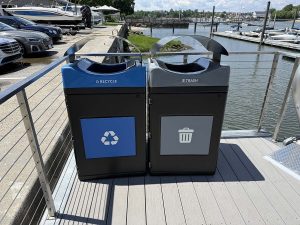
Many think being green starts with major and costly infrastructure. The fact is, there are many approaches that are simplistic and do not cost anything, such as picking up litter, turning spigots off and turning lights off when not needed. Every employee at a marina should understand that taking such actions is part of their job. When customers see managers and crew members taking such actions, they will be more likely to do the same. It definitely can help to have trash containers sufficiently available to encourage such behavior. Recycling paper, metal and plastic in most areas is easy and meaningful. Breaking down all those cardboard boxes allows for compacting and reduces costs. Closing spigots and hose bibs not only saves potable water but also saves money as potable water costs continue to increase.
There are also many initiative-taking and inexpensive actions that are environmentally beneficial, pay for themselves and help to improve the long-term bottom line. Installing motion detectors for lights will automatically turn them off when the facility is not in use, such as in restrooms, showers, laundry rooms and hallways.
Marinas need light during non-sunlight hours for safety as well as security, but it might not be necessary to have all the lights on during those hours. Putting some lights on timers and/or dimmers can save money and electricity, which is particularly desirable as electric bills continue to increase.
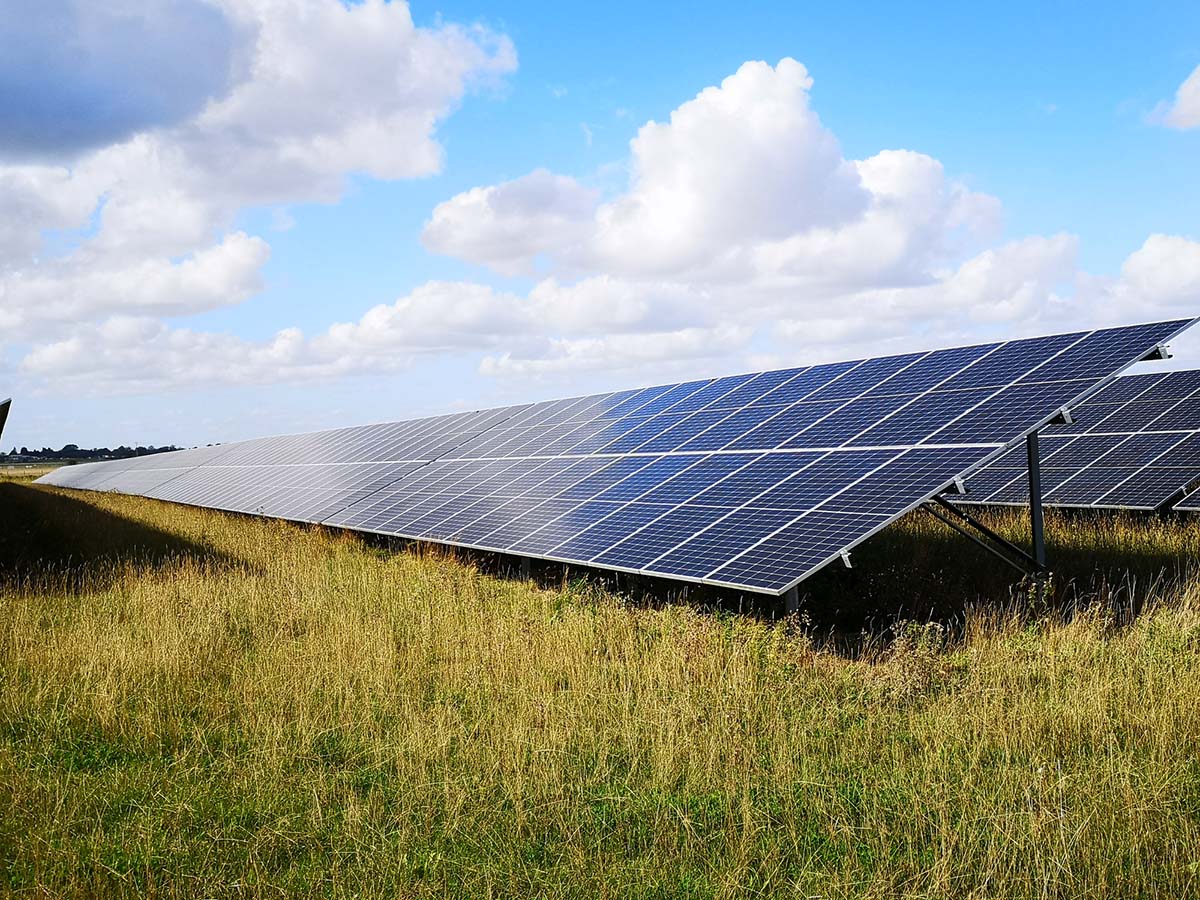
Adding solar panels is another option to save on electricity costs. Many marinas have large buildings free of tree canopies, creating several prime locations for solar panels. This is a bigger project and costs more, but, in many places, there are governmental and/or utility company subsidy programs available for such installations. In some cases, utility companies may pay a marina to install solar. Similar subsidy programs also may be available for wind energy generation.
Another area where grant monies may well be available would be for the purchase, maintenance and/or operation of pumpout facilities. While this may involve jumping through some hoops, the outside funding can definitely make it easier to provide the service.
When considering new products, such as wood decking, marina owners should take into account the environmental factors, as well as cost. Many think that hardwoods are desirable for their aesthetics, strength and longevity, but it is important to check to see where the wood is coming from, since illegal harvesting of trees in rainforests and other environmentally sensitive areas continues to be an issue. When selecting hardwood, consider requiring a certification from the supplier that their lumber does not include wood obtained through illegal pilfering.
The traditional industry workhorse in much of the United States continues to be Southern yellow pine due to its relative strength to cost balance, but it is important to understand that this wood often does not age that well. Southern yellow pine tends to warp, split and splinter, and it doesn’t have quite the same strength today as it did decades ago.
Composite decking is another option. However, there are numerous choices and qualities, with some much better than others. Many composite decking manufacturers suggest their products can span 24 inches, but that is only realistic with 2-inch-thick decking. If marina owners choose the more common ¾ inch decking, it is recommended to not have unsupported decking for more than 14 inches on center. Many composites hold up very well and do not splinter or crack if installed correctly. Many believe that composite decking is more environmentally desirable than many other alternatives.
Read the Fine Print
Unfortunately, there are many products on the market that allude to being green, but their printed language is hedged, and the products may not be what one thinks. Most products that are truly environmentally compatible are very clear in their language and reference testing.
The Green Boating Guide on the Sailors for the Sea website is chock full of good things that boaters can do to make their boating greener. There are sections on bilge maintenance, with references to the Duke Marine Lab and Boat U.S. Foundation’s testing and review of bilge pads, noting which performed best and which ones were worthless.
Many of the topics covered in the guide are also perfect opportunities for marinas to provide customer support and generate income in the process. Marina owners and operators should take the opportunity to stock their ship’s stores with those recommended bilge pads, as well as items like reef-safe sunscreen and greener cleaning products. One item not mentioned in the guide is cleaning sponges. Most sponges are made from plastic. For those looking to reduce plastics, consider sponges made from cellulose, coconut fiber or similar materials that are more effective at cleaning than their plastic counterparts.
The guide also emphasizes the importance of inspection and proper boat maintenance, noting that a well-tuned engine will be more fuel efficient, as will be an unfouled hull. With gas and diesel prices flying high at the moment, there is even more reason for boaters to be seeking to optimize fuel efficiency.
These are clear opportunities for a marina to promote the service department.
Consider using portable/temporary tents for outdoor hull maintenance/painting and similar service activities. The tents are relatively inexpensive, help contain debris and keep the sun and rain away, the latter allowing for cleaner stormwater runoff and fewer weather-related delays.
Of course, not everything about being green is always quite as easy, but it all starts with a mindset and attitude. Being proactive and easily implementing low-cost ideas, while at the same time working on larger or more expensive issues, is the best course of action.
Dan Natchez, CMP, is president of DANIEL S. NATCHEZ and ASSOCIATES Inc. He can be contacted by phone at 1-914-698-5678, by WhatsApp at 1-914-381-1234, by email at dan.n@dsnainc.com or online at www.dsnainc.com.

| Categories | |
| Tags |