

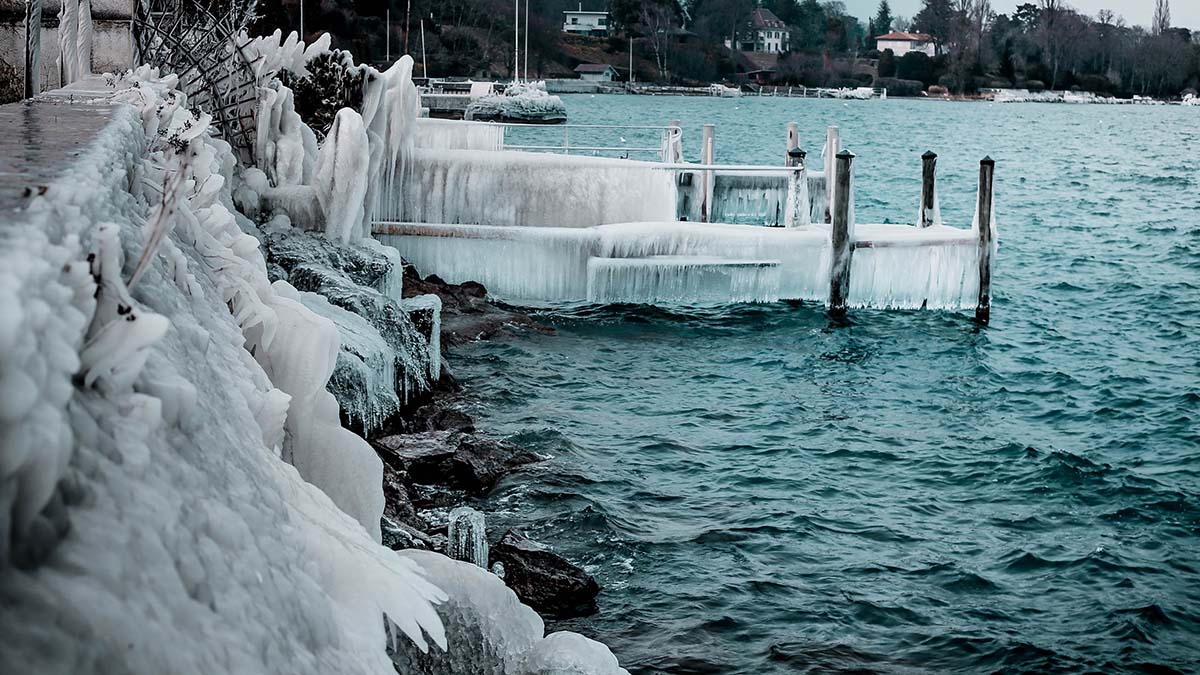
Not All Ice is Created Equal
Published on August 19, 2026


When most marina operators think about winter, they think of haul-outs, closing day procedures, and preparing for the slower months ahead. Increasingly, however, winter is becoming less predictable. Freeze-thaw cycles, stronger storms, fluctuating water levels, and unusual weather events are creating new challenges for marina owners across North America. As a result, successful winterization today requires more than simply shutting off the water and waiting for spring. It requires a site-specific approach to infrastructure protection, ice management, and risk mitigation.
The reality is that winter looks very different depending on a marina’s location, its exposure and infrastructure type. In northern states, the primary threat often comes from ice forming within lakes, reservoirs, harbors and marina basins. In southern states, freezing precipitation and ice loading can create equally destructive conditions, particularly for covered dock systems that were never intended to support significant snow and ice accumulation. Rivers and locations with fluctuating water levels have their own unique complications. As weather patterns become more variable, the traditional geographic boundaries between these challenges are becoming increasingly blurred.
Understanding the Northern Ice Challenge
For marinas across the Great Lakes region and much of the upper Midwest and Northeast, winter protection begins with understanding the forces ice can exert on waterfront infrastructure. Ice does not simply freeze in place. It expands, contracts, shifts with wind and water movement and can create tremendous forces through ice jacking, ice shove and compression. These forces can damage piles, docks, utility systems and shoreline structures if they are not properly designed or protected. In many northern marinas, the response depends largely on whether the marina basin is protected or exposed.
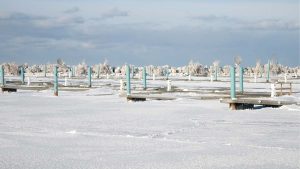
Marinas located within sheltered harbors, breakwaters, coves or enclosed basins often have a significant advantage: the marina may freeze into a relatively stable ice sheet. When wind, waves and current are minimized, ice can form around docks and infrastructure without generating the damaging movement associated with open-water conditions.
Marinas in protected locations can further encourage stable freezing conditions by installing temporary barriers or log booms near basin entrances. These structures help reduce ice movement entering the marina and allow ice sheets to remain relatively intact and immobile throughout the winter. In some locations, breakwaters can serve as the first line of defense against winter damage by reducing wave energy, limiting ice movement and creating conditions where a more stable ice sheet can form within the marina basin.
Floating dock systems supported by spud piles also perform well in these environments. Since the piles allow vertical movement with fluctuating water levels, docks can accommodate water level fluctuations and, under designed conditions, move with the surrounding ice rather than fully resisting ice forces. When utilities, pumps and water systems are properly winterized, many protected marinas — even in northern climates — can safely leave infrastructure in place until spring thaw.
The situation changes dramatically when docks are exposed to large bodies of water. Wind-driven ice sheets, fluctuating water levels, wave action and currents can transform even moderate ice conditions into a significant threat.
For many open-water facilities, seasonal removal remains the most reliable strategy. Floating docks, utility connections and other vulnerable infrastructure are removed in the fall and reinstalled in the spring. While labor-intensive, removal eliminates the risk of catastrophic ice damage and often extends the life of marina assets.
Where docks remain in place, de-icing systems frequently become part of the solution. Propeller-style de-icers, bubbler systems and water circulators work by moving comparatively warmer water from below the surface to reduce ice formation around critical infrastructure above. Proper placement is essential, but when correctly installed, these systems can protect docks, pilings, boats and utility crossings from damaging ice pressure.
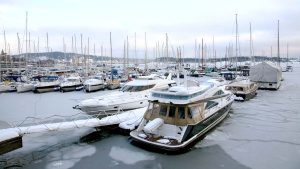
Aerators and circulators offer an additional year-round benefit. During winter they deter ice formation and reduce ice adhesion to structures. During warmer months, they promote water circulation, improve water quality and help reduce stagnant conditions that contribute to algae growth and surface scum.
Some dock manufacturers also have developed systems specifically engineered for cold-climate applications. These designs utilize reinforced piling arrangements and underwater bracing systems installed below anticipated ice action zones, allowing docks to better withstand ice movement and winter loading.
Southern Marinas Face a Different Kind of Ice
Unlike Northern facilities, marinas throughout the South generally do not remove their infrastructure during winter. Instead, their greatest vulnerability often comes from rare but intense ice and snow events.
Even a half inch of ice accumulation can dramatically increase loads on docks, gangways, roofs and support systems. Unlike northern facilities, which are designed with regular freezing conditions in mind, southern marinas may experience ice storms that create substantial loads on structures not routinely exposed to winter weather. This can result in bent framing, collapsed roof sections, damaged dock systems and extensive repairs.
Covered slips are particularly common throughout Southern states. Extended sunshine, heat exposure and UV degradation make roofed dock systems highly desirable for protecting boats year-round. This trend extends well into portions of the Midwest, including central Iowa and Illinois, and may continue expanding northward as weather patterns evolve.
The challenge is that these roof systems become vulnerable during ice events. Ice accumulation adds significant weight across large spans, increasing stress on columns, purlins, connections and foundations. Even relatively minor ice events can expose design weaknesses.
As a result, many marina designers emphasize stronger structural systems, including heavier-gauge columns, more substantial purlins, additional cross-bracing, horizontal bracing systems and conservative column spacing. Metal roofing systems remain the industry standard, typically utilizing 24- or 26-gauge panels designed to shed moisture efficiently. Gable roofs, single-slope roofs and vented clerestory designs remain common solutions that balance weather protection with summer ventilation needs.
In some facilities, ice fins and heat tape provide supplemental protection, helping reduce ice buildup and direct meltwater away from vulnerable areas.
Rivers Require Their Own Approach
River marinas present a unique challenge because no two river systems behave exactly alike. Ice management strategies depend on numerous factors, including channel width, flow velocity, depth, water-level fluctuations and local climate conditions.

A slow-moving inland river that freezes consistently may behave similarly to a lake environment. Meanwhile, a larger river with constant flow may experience ice breakup events, shifting ice sheets and rapidly changing water levels throughout the winter.
For these facilities, winterization decisions should be based on local experience and site-specific engineering assessments rather than regional assumptions alone. The question is not simply whether a river freezes, but how it freezes, moves and breaks up over the course of a winter.
All Water-Level Fluctuations Matter
Water-level fluctuations can significantly influence winter performance across all latitudes. Reservoir drawdowns, river stage changes, seiche activity and winter storm events may alter how ice interacts with docks, piles, gangways and utilities. Facilities that perform well during stable winters can experience damage when ice remains fixed while water levels rise or fall. Understanding anticipated seasonal water-level changes is often just as important as understanding ice conditions themselves.
Winterizing Critical Marina Systems
Whether a marina is in Minnesota or Tennessee, some aspects of winterization remain universal.
Water systems should be among the first priorities. Frozen pipes can create expensive damage that far exceeds the cost of preventative maintenance. Many facilities blow out water lines and introduce environmentally responsible antifreeze solutions to protect vulnerable sections of the system.
Utility routing can also make a difference. In some marina layouts, running primary water lines through gangway systems rather than beneath floating docks can reduce exposure to ice-related damage and simplify future maintenance.
Sanitary systems require similar attention. Many marinas work with plumbing contractors to blow out sewer lines using compressed air, protect connections with antifreeze and verify that backflow prevention systems remain operational throughout the offseason.
Pumpout systems, fuel dispensers and auxiliary mechanical systems also should be winterized. Electrical systems are commonly de-energized when practical, reducing both safety risks and unnecessary wear during the off season. An organized marina team often can complete a comprehensive winterization process in a single day when maintenance activities are planned in advance.
The Best Ice Management Strategy Is Preparation
There is no universal winterization formula that works for every marina. A sheltered basin on Lake Michigan, a riverfront facility along the Mississippi and a covered-slip marina in Arkansas all face very different winter risks.
Many successful winter management strategies originate during the planning and design process. Dock selection, pile spacing, utility routing, breakwater protection, structural load capacity and access considerations can all influence how a marina performs during winter conditions. Facilities that account for local ice, water-level and weather conditions during design often require fewer corrective measures over their service life.
Operators should consistently evaluate their site conditions, understand their infrastructure vulnerabilities, maintain facilities throughout the year and invest in preventative measures before winter arrives. Whether that means removing docks, installing de-icers, reinforcing roof structures, winterizing utilities, or simply improving routine maintenance, preparation remains the most effective defense against winter damage.
As weather patterns continue to shift and become less predictable, marinas that adopt flexible, location-specific winter management strategies will be the best positioned to protect their infrastructure, reduce long-term costs and enter each spring season ready for business.
Dan Williams, PLA, ASLA, AHLP is principal landscape architect at MSA. He can be reached at dwilliams@msa-ps.com. Marcus Rue, PE is engineering team leader at MSA. He can be reached at mrue@msa-ps.com. Ed Snyder, CMM is regional sales manager at MariCorp U.S. He can be reached at ed.snyder@mcus.com
| Categories | |
| Tags |