

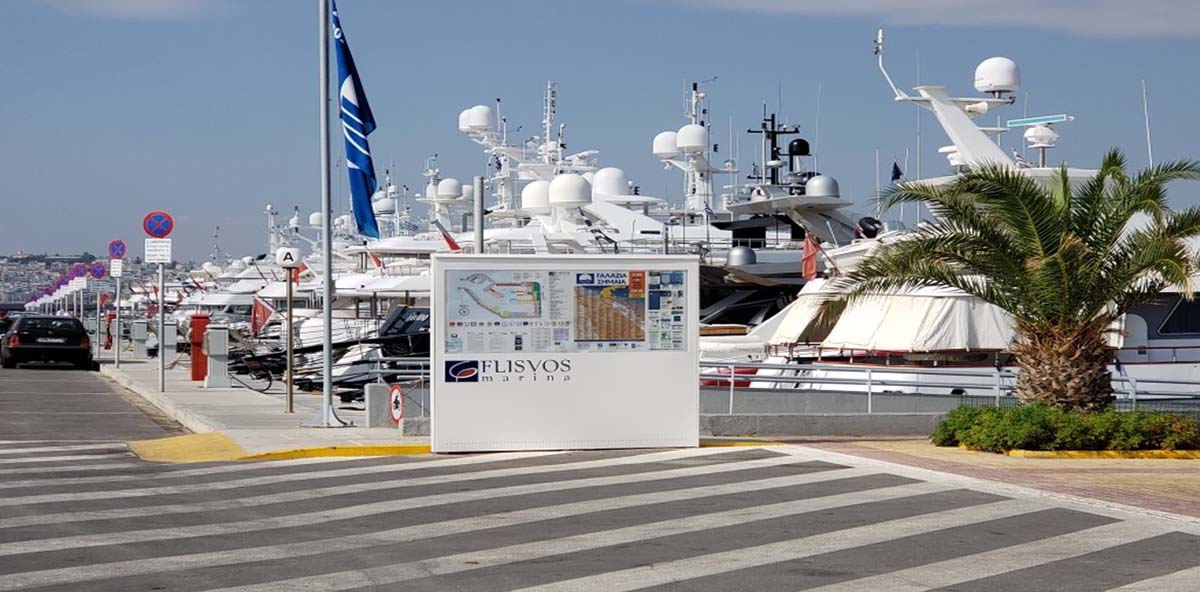
Putting the WOW into Marina Design
Published on March 2, 2026


Every marina operator and owner believes that they have a great marina. Some boast that they have the best, and most facilities have at least one attribute that, in their opinion, gives credence to the perspective.
A wow marina is not dependent upon how big it is, whether it is an independent or chain, or whether its location is on the coast, a lake, reservoir, or river. For that matter, it doesn’t matter what that one special attribute is, even if that happens to be a lighthouse, casino or air strip.
Functional Designs
There are numerous design components that go into creating a wow facility, but the overwhelming factor ultimately is functionality.
Unfortunately, the world tends to focus on the negative, rather than the positive. Local and national news tends to concentrate on the problems of the day, not what was great about the day. Travelers often recall the uncomfortable seats or temperature of the airplane cabin before mentioning that the security lines were short and their flights were on time.
This approach carries into customers’ conscious and subconscious views of a marina. Putting the wow into marina design is making sure all the components fit together and work in unison. The best compliment that I have ever received as a marina designer was when a marina customer was asked what they liked about the facility. Their response was, “It just works.” For a designer, that means there were no negatives or things to change, and that is not an easy achievement.
Some of the most common elements of marina design include having a sheltered, secured and safe facility. This includes shelter from adverse wave conditions and exposure in significant storms. Some facilities have natural sheltering, but many are not as fortunate, and wave protection is needed, which is not an inexpensive design element. Having a meaningful wave study and choosing the most appropriate attenuation is key, with the most effective but also the most expensive solution typically being rubble mound breakwaters. In some locations with waves not exceeding 3 feet, floating attenuators may be appropriate. In choosing the most meaningful and cost-effective approach, marina representatives need to consider the various elements, including water depth, various wave types and directions and entrance widths, as well as the types of boats desired for the facility.
Creating a safe environment is more than just designing for safety from the water. It also includes providing safety from the land, and, depending upon the location, can include such elements as fencing, security cameras, lighting and staffing, all undertaken in a manner that provides the feeling of security, while at the same time not making the facility feel like a prison or otherwise unwelcoming environment.
Selecting Infrastructure
Choosing the appropriate docks, such as fixed or floating, associated anchoring and types of materials is also very important. There are numerous options, but in all cases, the docks need to provide a feeling, look and reality of being as solid and stable as possible, thereby providing customers with comfort and security while walking the docks and confidence that their boats are moored to something secure.
For floating docks, the dock connections are important, as are the types, amounts and placements of flotation, to provide stability while allowing for water elevation fluctuations and various wave conditions. The connections often are a source of tripping, and most do not meet barrier-free/handicap requirements, but they can be worked out with some extra effort.
For walking surfaces, it is important to select an option that can help prevent future warping and/or sagging issues for board decking and cracking, spalling and chipping for concrete. For decking, many use the thinnest timber or composite materials, often 1 by 6 inches with stringers placed at 18 to 30 inches on center. Narrower spacing of stringers as well as using thicker 2- by 6-inch decking is more desirable in eliminating future issues. While wood decking is typically less expensive with more strength than other types of decking, it is important to note that the wood today does not have the same properties as decades ago.
As one is going through the design and material selection process, incorporating sustainability, longevity and maintenance issues is relatively easy and can be economically helpful in the overall project costs as well as over time. It can affect not only large-ticket items but also simple and low-cost items. Many tend to concentrate on specific aspects of a design element without thinking about its sustainability, longevity and maintenance, all of which can impact functionality.
Making sure docks are wide enough and the slips are long enough for the intended boats is fundamental. Ensuring that the intended pathways remain free from clutter and overhanging boat bows and bowsprits, which not only provides for a better customer feel, but also helps avoid many potential lawsuits, is also important. Location, heights and sufficient electric, water and other utilities as well as types of connections and handles are important for ease of use. There are both electric codes as well as ADA accessibility requirements that can help provide for safer and improved use of the utilities.
Preventing Accidents
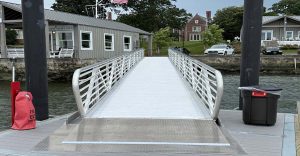
For the transition from the upland to the water, it is important to provide a feeling of firmness and ease of use, as most boaters are arriving or departing with arms full of stuff and/or using carts. Adding steps at a marina should always be avoided if possible. For floating facilities, gangways are the most commonly used approach. Providing transition plates on the top and bottom in a manner that creates a smooth transition is important. While walking, people typically look straight ahead rather than looking down. This allows for tripping on uneven surfaces, which is one of the most common lawsuits against marinas. There are also ADA accessibility requirements for gangways leading to accessible slips, which fundamentally translates to no steps or tripping hazards.
Signage is important for both upland and in-water facilities. Unfortunately, we are in an era of sign pollution, which turns off many, and, at some point, the signs are basically not read. Making them informative and attractive with bright lettering is easy. There are many postings required for legal purposes, and putting those in a dedicated area, such as a bulletin board that is conspicuous but perhaps not front and center, can satisfy the legal requirements while at the same time separating them from the signs that are more meaningful for customers’ use for directions as well as warnings.
Important Amenities
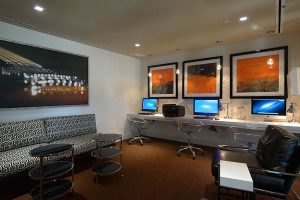
While the increasing availability of 5G cell service is starting to provide some alternatives, the availability of good Wi-Fi is still the number one issue most marina customers complain about. The world has changed, and everything is getting connected through one’s phone. When connections do not work immediately, intermediately or not at all, be prepared for the onslaught of complaints. Worse, customers focus on it when talking with others, and they are always looking for places that have great Wi-Fi, which are rare.
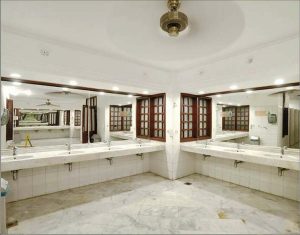
Prior to Wi-Fi, bathrooms were the number one amenity on customers’ minds. The outhouse approach is no longer acceptable in most circumstances. Creating attractive bathrooms, with showers and laundry facilities is extremely meaningful for customers and their guests. For transients, bathrooms are a major topic of discussion when checking in with other boaters. Creating attractive and functional restrooms is relatively easy these days, with modern materials available that can provide a very inviting facility, at relatively modest cost, and which are actually much easier to keep clean.
First Impressions
Marinas are in the hospitality business, and first impressions can make or break a facility’s reputation. From a design vantage point, that impression is extremely important, and favorable impressions can be achieved not only by the design and facades of the buildings, but also through well thought out and organized site layout and landscaping. Marinas are also required to implement various stormwater and other pollution control activities. Combining these requirements and desires is relatively easy, which can present an inviting appearance upon coming to the facility, whether from land or water, as well as inside the facility, while at the same time considering various required controls. For instance, creating a vegetated berm along the waterfront can control stormwater while presenting an aesthetically pleasing atmosphere.
There are many regulatory requirements that need to be incorporated into design, such as accessibility, health and safety, using acceptable materials, shading and water circulation. While these requirements can seem daunting at times, they are often helpful in the long run.
Putting all the pieces together and having them work and function together provides the kind of seamless approach that customers will appreciate and be willing to pay for. Since design is only part of the equation, we’ll dive into putting the wow into marina operations in our next column.
Dan Natchez, CMP, is president of DANIEL S. NATCHEZ and ASSOCIATES Inc. He can be contacted by phone at 1-914-698-5678, by WhatsApp at 1-914-381-1234, by email at dan.n@dsnainc.com or online at www.dsnainc.com.
| Categories | |
| Tags |