

Universal Access is Beginning to Define the Future of Marina Operations
Published on April 1, 2026


For many lifelong boaters, the hardest part of a day on the water isn’t navigating a narrow channel or docking in a stiff crosswind; it’s the simple act of stepping from the dock onto the boat. As the boating population ages, what was once a routine step is increasingly becoming a barrier to entry. To marina owners and operators, this represents more than just a physical hurdle; it’s a looming threat to tenant retention and long-term slip occupancy.
Enter the concept of “universal access.” It is a philosophy that goes beyond the required ADA ramps and parking spaces, extending the promise of the open water to boaters of all ages and physical abilities. At the forefront of this movement is Lake Leelanau, Michigan-based HandiCaptain, a company that spent two decades refining a solution to one of the industry’s most persistent challenges: the dock-to-boat transition.
The Spark of Innovation
HandiCaptain wasn’t born in a corporate boardroom; it was born on a family dock. Adam Begley, president of HandiCaptain, watched as his father’s aging and loss of balance began to turn the family outings into high-risk maneuvers.
“I couldn’t find a solution that felt safe, dignified or independent,” Begley said. “Everything relied on lifting, improvising or heavy assistance from others. That didn’t feel right.”
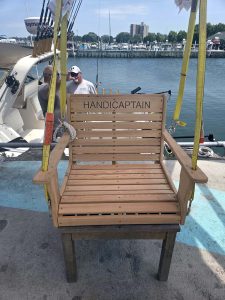
Begley’s frustration led to the development of a system that replaces manual lifting with engineered motion. Over the last 20 years, the HandiCaptain has evolved from a single-use prototype into a refined, marine-grade system. By adapting hospital-grade transfer technology for the harsh waterfront environment, Begley created a tool that allows mobility-challenged boaters to reclaim their independence.
Engineering Independence
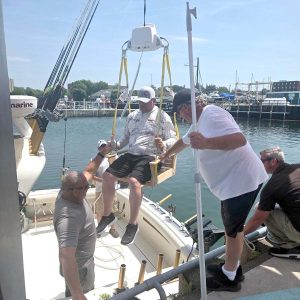
The core of the HandiCaptain system is a cantilevered transfer track combined with a battery-powered, self-controlled lift motor. Unlike traditional boarding methods, which often involve “the bear hug” or precarious steps over open water, HandiCaptain users are supported by the system itself.
The motion is controlled and predictable, eliminating the sudden shifts in weight that lead to falls. Because the user, or a single companion, can operate the lift, the need for a “boarding crew” is eliminated. This preservation of dignity is a major factor for aging boaters who may otherwise feel embarrassed by their physical limitations.
“The key difference is that the user is supported by the system, not by people,” Begley said. “It turns a high-risk moment into a safe, routine action.”
A Strategic Advantage for Marina Managers
From an operational perspective, the HandiCaptain offers a compelling “why” for marina managers. As the industry faces a shifting demographic, accessibility is no longer a niche requirement; it’s a retention strategy.
Many longtime slip holders stop boating not because they lose interest, but because they lose confidence in their physical ability to board their vessels. When a boater gives up their slip due to mobility issues, the marina loses a loyal, often decades-long customer. By providing a safe boarding solution, marinas can extend the “boating life” of their best tenants.
The HandiCaptain also reduces liability. Falls on the dock are among the most common accidents in a marina setting. By implementing an engineered, stable transfer system, marinas significantly reduce the risk of injury to users, guests and staff members who might otherwise be asked to help a boater board.
The ease of integration is key. One of the primary concerns for marina managers is the complexity of infrastructure upgrades. Begley designed the HandiCaptain with retrofitting in mind. The system integrates into existing docks, boat hoists or boathouses without requiring major structural overhauls.
The system is designed to keep the “marina aesthetic” intact. The lightweight motor is easily detached for storage and charging when not in use, keeping the docks clear of clutter and protecting the equipment from the elements.
Real-world Success
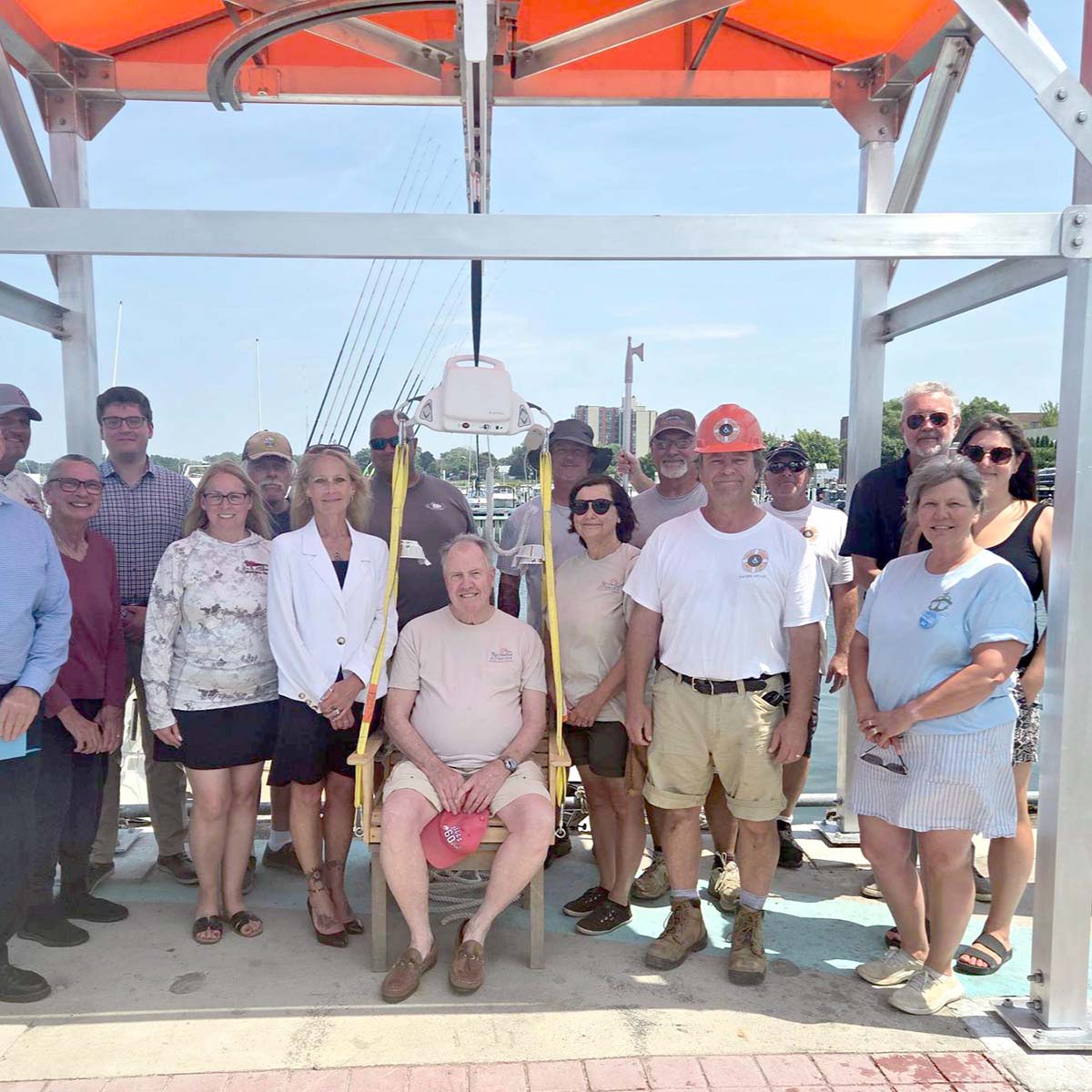
The theory of universal access is already being put into practice. This past season, municipal harbors in Dunkirk and Barcelona, New York, became some of the first city-run marinas to install HandiCaptain boarding stations.
The impact was immediate. In Dunkirk, the installation was hailed as a “first-of-its-kind” solution for public waterways. For these municipalities, the HandiCaptain isn’t just a piece of equipment; it’s a signal to the community and visiting boaters that their harbor is open to everyone, including veterans, the elderly and families with disabled members.
The interest from these New York installations has sparked a ripple effect across the Great Lakes. Marina operators along Michigan’s Lake Michigan shoreline are now evaluating how these systems can be integrated into their long-term waterfront planning.
David Babcock, the highway department supervisor for the town of Westfield, New York, oversaw installation at Barcelona Harbor.
“The HandiCaptain transfer station lift unit is a great addition to our boat launch facility,” Babcock said. “Everything bolted up perfectly. That made the project enjoyable to assemble and only took a few hours to complete.”
The Road Ahead
Looking toward the next decade, the standard for marina accessibility is shifting. The conversation is moving past “How do we get them to the dock?” to “How do we get them on the boat?”
“Accessibility starts with ramps and parking, but it doesn’t end there,” Begley said. “Over the next decade, I expect dock-to-boat access to become part of standard marina planning, especially as public marinas focus more on inclusion and community use.”
For the private marina owner, the HandiCaptain represents a way to differentiate their facility in a competitive market. For the public harbor master, it is a way to serve a broader segment of the tax-paying public. In both cases, the goal remains the same: ensuring that the joy of boating isn’t something people have to age out of.
The water doesn’t care about age or physical ability, and now the dock doesn’t have to either. By investing in universal access, marinas are doing more than just installing hardware; they are future-proofing their businesses and honoring the lifelong passion of their boaters.
As Begley put it: “The goal isn’t to change boating; it’s to make sure more people can keep doing it safely for as long as they want.”
| Categories | |
| Tags |