

Yacht Hampton’s ‘FleetShare’ Model Is Redefining the Modern Marina
Published on July 1, 2026


For decades, the traditional marina revenue model has relied on a reliable, predictable cadence: lease the slip, sell the fuel, winterize the hull and repeat. But as consumer demographics shift and the modern luxury consumer increasingly prioritizes experiences over asset ownership, forward-thinking operators are discovering that the space within the slip holds far greater financial potential.
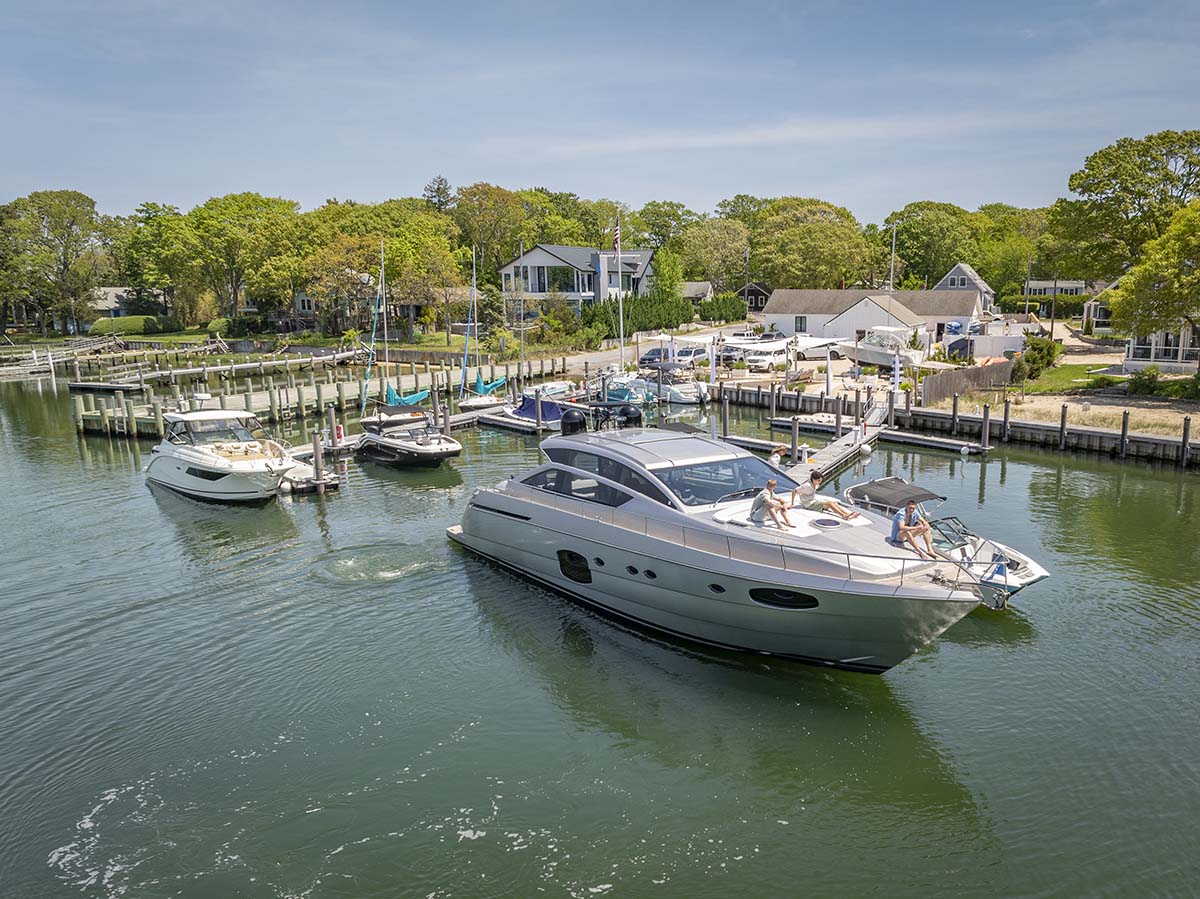
At the vanguard of this evolution is Yacht Hampton. Nestled in its summer home in Sag Harbor, New York, the operation looks and feels like an elite private enclave. But underneath lies a disruptive operational structure: a membership-based yacht club powered by a proprietary FleetShare™ model.
The FleetShare™ Paradigm
Traditional boating models have long forced consumers to accept compromises. Fractional ownership ties a boater to a single vessel while burdening them with shared maintenance liabilities. Traditional boat clubs and private charters are other options that offer variety and luxury but might lack the personalization boaters are looking for when enjoying a day on the water.
Yacht Hampton Founder Joe Ialacci conceived the FleetShare™ model to erase these boundaries, providing a dynamic fleet of more than 25 premium vessels accessed through a single, seamless membership.
“FleetShare™ takes the best elements of fractional ownership, high-end boat clubs and private charters and completely reengineers them,” Ialacci said. “FleetShare™ members get an entire top-tier fleet backed by a dedicated concierge team and a crew that anticipates their every need. It delivers the pride and feel of ownership with the ultimate ease of charter.”
The inspiration for the model stemmed from a simple data point familiar to any marina manager: asset underutilization.
“Growing up on the water on Long Island, I watched people buy these beautiful boats, use them a handful of times and then spend the rest of the year paying for them to sit idle in a slip,” Ialacci said. “The math is brutal. A boat sits idle roughly 330 days a year. The average owner is out on the water just 15 to 30 days annually.”
Factor in the slip, crew, maintenance and insurance, and the cost per use is astronomical, Ialacci said.
“The irony of the luxury market is that the people who can most afford to enjoy the water have the least amount of time to manage the logistics,” Ialacci said. “We realized they didn’t want the burden of the asset; they wanted the experience of the water, fully realized. Access without the friction was the clear opportunity.”
A Concierge Experience
While many asset-light boat clubs rely on third-party municipal slips or fragmented commercial partnerships, Yacht Hampton’s operational centerpiece is its privately owned boating club and marina in Sag Harbor.
“When a member pulls into our private parking lot, their experience begins immediately. Their onboard stewardess is already waiting at the dock to greet them, help unload the vehicle, escort them to the vessel and valet park their car,” Ialacci said. “By the time their feet touch the deck, the day has already started on the right note. The docks, the staff, the social energy, the hosted events — these entities function simultaneously as an operational powerhouse and a private waterfront club.”
From this central Sag Harbor hub, the operation orchestrates custom departures and pickups across an expansive East End network, including East Hampton, Montauk, Shelter Island and Greenport.
A key driver of member retention within the FleetShare™ model is the diversity and caliber of the fleet. Rather than stocking uniform center consoles, Yacht Hampton has curated an international portfolio of design-forward, high-performance vessels that serve different mission profiles for the same member.
Among the standout selections is the 43-foot Pardo, an Italian-built walkaround celebrated for its minimalist lines and low-profile bow lounge. For members requiring elevated performance and scale, the 62-foot Pershing delivers aggressive design, blistering speed and generous entertaining zones.
There is also the award-winning 36-foot De Antonio, which is a Spanish-designed open-plan day boat, and the 52-foot Santasevera, an Italian-built yacht from Guida Design Studio with a wide beam and indoor-outdoor layout tailored for stable entertainment.
“The range is what drives our incredible member retention. The exact same member who books a relaxed, open day boat like the De Antonio for a family Sunday will turn around and book the 62-foot Pershing for a high-end corporate evening two weeks later,” Ialacci said. “A fleet that can serve both of those distinct moments for the same person is what keeps people coming back year after year.”
A Consistent Business Plan
Operating a multi-million-dollar fleet with high utilization requires rigorous maintenance and turnaround protocols. To sustain pristine cosmetic and mechanical conditions, Yacht Hampton relies on total vertical integration. The company directly employs its own USCG-licensed captains, crew, mechanical teams and safety officers.
“Consistency is everything in the luxury hospitality business. When you rely on outside brokers or independent contractors, the experience is wild and unpredictable,” Ialacci said. “We built an entirely in-house operation early on. Because our captains and crew are full-time stewards of these specific vessels, they know them intimately. They can catch a minor mechanical or cosmetic variance before it ever evolves into an operational problem.”
Every outing triggers a mandatory turnaround protocol. Once a vessel returns, it immediately moves through a full clean and detailing stage, followed by fueling and provisioning. From there, the team executes a comprehensive safety and mechanical audit before the concierge finally releases the boat back into active inventory.
This vertical integration also solved the classic Northeast hurdle: seasonality. To retain elite crew talent past the autumn freeze, Yacht Hampton executed a strategic expansion into Palm Beach County, Florida.
“Our members who split their time between the East End and South Florida stay entirely within our ecosystem,” Ialacci said. “The deep bond of trust between the crew and the members continues uninterrupted, regardless of the latitude.”
For forward-looking marina owners, the lesson of Yacht Hampton is clear: the future of the industry lies in transforming passive slip infrastructure into active, highly integrated hospitality ecosystems. By controlling the real estate, the technology, the staff and the fleet, operators can unlock unprecedented margins while delivering the exact frictionless experience the modern luxury market demands.
“Our mantra has become ‘miss us by Tuesday,’ because clients who book their first weekend trip with us always call back to book their next,” Ialacci said.

| Categories | |
| Tags |